

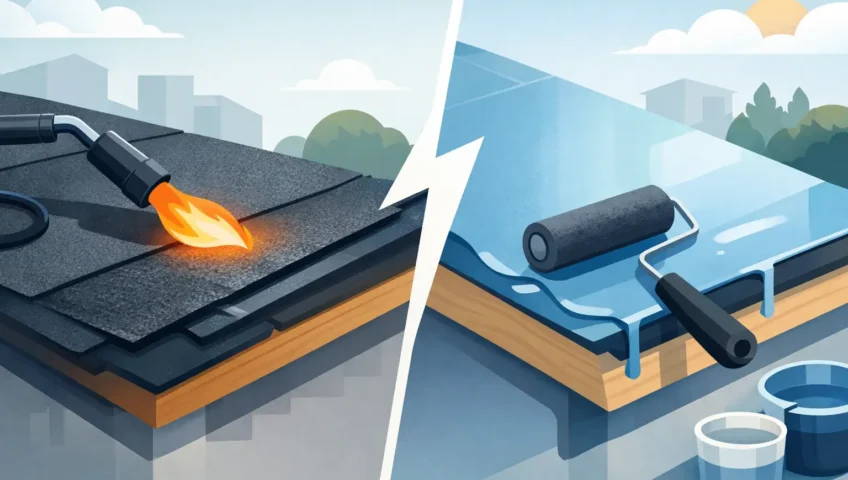
When a flat roof starts leaking, blistering or simply looking past its best, the question usually comes down to felt roof vs fibreglass roof. On paper, both can keep a property watertight. In reality, they suit different budgets, different buildings and different expectations. If you want the right result, it helps to look beyond the headline price and think about lifespan, repairability and how the roof will cope with Scottish weather year after year.
For most homeowners and property managers, this is not really about roofing theory. It is about avoiding repeat call-outs, preventing water damage and making sure the money spent now does not turn into a bigger bill later. That is where the difference between felt and fibreglass becomes much clearer.
Felt roof vs fibreglass roof – the basic difference
A felt roof is typically built using layers of bitumen-based membrane, often applied with heat to create a waterproof finish. Modern felt systems are better than the older versions many people still picture, and when fitted properly they can offer solid protection at a sensible price.
A fibreglass roof, also known as GRP roofing, is formed using a resin system reinforced with fibreglass matting. Once cured, it creates a hard, seamless surface. It is often chosen for garages, extensions, dormers and other flat roof areas where a neat finish and longer service life are important.
Both systems can work well. The better option depends on the size of the roof, the condition of the deck underneath, the budget available and whether you want the cheapest short-term answer or the strongest long-term value.
Cost matters, but it should not be the only factor
If price is the main concern, felt usually comes out cheaper at the outset. That is one reason it remains popular for sheds, garages, outbuildings and some larger flat roofs where keeping installation costs under control matters.
Fibreglass usually costs more to install. The materials are more expensive, and the roof needs to be laid in the right weather conditions by an experienced team. That higher starting cost can put some people off, especially if they are dealing with an urgent leak and want a quick fix.
But upfront cost only tells part of the story. A cheaper roof that needs patch repairs, joint attention or earlier replacement can end up costing more over time. If you are planning to stay in the property for years, or you manage a building where reliability matters, fibreglass can be the better investment.
Lifespan and long-term value
This is where fibreglass often pulls ahead. A well-installed GRP roof can last for decades, and because it is seamless across the main field of the roof, there are fewer obvious weak points where water can get in.
Felt roofs can also last well, especially modern high-performance systems, but they generally have a shorter lifespan than fibreglass. The exact number depends on the quality of the material, the workmanship and the exposure of the roof. A small domestic flat roof in a sheltered spot may perform perfectly well for years, while a more exposed roof can take a harder beating from rain, frost and standing water.
So if you are comparing felt roof vs fibreglass roof purely on lifespan, fibreglass usually has the edge. If you are comparing them on value for a modest budget, felt can still make very good sense.
How they handle Scottish weather
In places like Glasgow and Lanarkshire, roofing materials need to cope with repeated rain, cold snaps, wind and the general wear that comes from a damp climate. This is where installation quality matters just as much as the material itself.
Fibreglass performs well because it forms a fully bonded, watertight finish with no seams across the main surface. That reduces the risk of water finding its way through laps or joins. It is also a tough system once cured.
Felt is more flexible in some conditions and has improved a lot over the years, but it relies on correctly formed overlaps and detailing. If corners, joints or edges are poorly finished, those areas can become vulnerable. That does not mean felt is unreliable. It means the standard of workmanship is critical.
On a properly prepared roof, either system can handle poor weather. On a badly fitted roof, neither will give you the protection you expect.
Appearance and finish
If kerb appeal matters, fibreglass usually gives a smarter finish. It has a clean, modern appearance and can look particularly tidy on extension roofs and visible flat roof sections. For homeowners investing in wider property improvements, that can be a deciding factor.
Felt is more functional in appearance. That is not necessarily a problem, especially on roofs that are barely seen from ground level. But if the roof is prominent, fibreglass tends to look more polished.
This may sound like a minor point, but appearance matters when you are protecting property value. A roof that looks worn or patchy can make the whole building seem tired, even if it is still doing its job.
Repairs and maintenance
One advantage of felt is that localised repairs can often be straightforward. If a section has split or lifted, it may be possible to repair the affected area without replacing the full roof. That can make felt attractive for older roofs where the goal is to extend life rather than start again immediately.
Fibreglass is very durable, but when problems do occur, repairs need to be handled correctly to maintain the integrity of the system. A poor patch on GRP tends to stand out more, both visually and technically.
That said, fibreglass roofs usually need less attention over time if installed properly from the start. Felt may be easier to patch in some cases, but fibreglass often wins on lower ongoing maintenance.
Installation conditions can affect the choice
This is one of the practical details many property owners do not hear about until the job is underway. Fibreglass needs suitable weather conditions for installation because the resin has to cure correctly. Heavy rain, low temperatures or damp surfaces can affect the process.
Felt can sometimes be a more flexible option when conditions are less predictable, although installation still needs to be done properly and safely. On some larger jobs or urgent replacements, that can influence the recommendation.
This is why a proper inspection matters. The right answer is not always about which material is better in general. It is about which material is better for that roof, at that time, in those conditions.
Which roof is better for different property types?
For a domestic extension where appearance, lifespan and a strong modern finish are priorities, fibreglass is often the better fit. It is also a popular choice for garages and dormers where a seamless surface is a real advantage.
For larger flat roofs, budget-sensitive projects or buildings where cost control is a major factor, felt can be a very practical solution. It can also suit situations where repairability matters because the roof is ageing but not yet ready for full replacement.
Commercial and agricultural properties are a little different again. In those cases, the best choice often depends on roof size, access, usage and the structure beneath the covering. There is no one-size-fits-all answer.
When felt is the right choice
Felt is often the right option when you need a dependable flat roof without stretching the budget too far. It suits many homeowners who want a cost-effective installation from a professional team and would rather spend sensibly than pay for a premium finish they do not need.
It can also be the better choice when replacing an older felt roof like-for-like, especially if the structure and detailing already suit that system. Modern felt should not be dismissed because of memories of older, lower-grade materials. The quality today is far better when the right products are used.
When fibreglass is worth paying more for
Fibreglass is worth the extra cost when longevity is a priority and you want the roof to stay low-maintenance for years. It is especially attractive on smaller to medium-sized flat roofs where the cleaner finish and seamless waterproofing justify the higher initial spend.
It also suits property owners who want to avoid the cycle of repeated patching and reactive repairs. If you have already spent money dealing with recurring flat roof issues, paying more now for a stronger long-term system can be the smarter move.
The real deciding factor – the condition of the roof beneath
The covering itself is only one part of the job. If the timber deck underneath is rotten, the edges are failing or the drainage is poor, choosing between felt and fibreglass will not solve the whole problem. The roof needs to be assessed properly, and sometimes the best savings come from targeted repairs rather than a full strip and replacement.
That is why experienced advice matters. A trustworthy roofer should explain what condition the roof is in, whether repair is still sensible, and which system offers the best balance of cost and performance for your property. At Varey Contracts Ltd, that practical approach matters because many customers are not looking for the most expensive option. They are looking for the right one.
If you are weighing up felt roof vs fibreglass roof, the best choice usually comes down to this: felt is often the more affordable option and can perform very well, while fibreglass usually offers a longer-lasting, neater and lower-maintenance finish. The right roof is the one that suits your building, your budget and the level of protection you want for the years ahead.

