

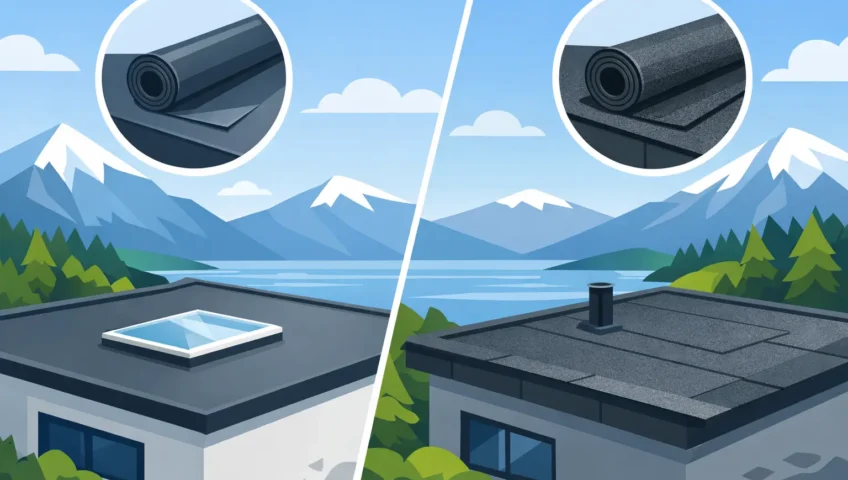
A flat roof that has started blistering, cracking or letting water through needs the right repair – not simply the cheapest material available on the day. When weighing up EPDM vs felt roofing, the best choice depends on the roof’s condition, its size, how long you need it to last and the detail around edges, outlets and adjoining walls.
Both systems are widely used across Glasgow and Lanarkshire. Felt remains a practical and cost-effective solution for many garages, extensions and commercial roofs, while EPDM rubber has become a popular option for homeowners looking for a long-lasting, low-maintenance finish. The important part is making sure the existing deck and roof details are properly assessed before work begins.
EPDM vs Felt Roofing: the main difference
EPDM is a synthetic rubber membrane, normally installed in large sheets and bonded to a prepared roof deck. Its flexibility is one of its biggest strengths. It copes well with movement caused by changing temperatures and can usually be fitted with fewer joints than a traditional felt roof.
Felt roofing, often called torch-on felt, is built up in layers. Modern systems are far removed from the thin roofing felt found on older sheds. A quality torch-on system uses durable modified bitumen layers, with a mineral-finished cap sheet designed to protect the roof from weather and UV exposure.
Neither material is automatically right for every job. A small, simple domestic extension may suit EPDM exceptionally well. A roof with numerous upstands, awkward penetrations or a detail that benefits from a layered system may be better suited to felt. The quality of preparation and installation matters just as much as the product chosen.
Lifespan and performance in Scottish weather
Scotland’s rain, wind and repeated freeze-thaw cycles can expose poor flat-roof workmanship quickly. Water finds weak seams, loose edge trims and badly formed outlets. For that reason, expected lifespan should be considered alongside the initial quote.
A professionally installed EPDM roof can commonly provide 30 years or more of service, provided the roof deck is sound and drainage is working as it should. The membrane is resistant to UV light, remains flexible in colder conditions and has no flame used during installation. Its large-sheet format also means fewer seams, reducing the number of potential weak points.
A modern high-quality felt roof can typically last around 20 to 30 years. Its exact lifespan depends on the specification, number of layers, exposure to weather and the standard of the installation. Felt is tough, can handle foot traffic better in some situations and is well suited to roofs where regular access is needed for maintenance equipment.
Standing water is a concern with either option. A properly designed flat roof should direct water towards outlets or gutters, even though the surface may look level from the ground. If a roof has persistent ponding, covering it over without addressing the fall may only delay further problems.
How each system handles movement
EPDM is naturally elastic. This makes it particularly useful on roof areas that expand and contract through the seasons. It can accommodate minor movement without becoming brittle, which is valuable on domestic flat roofs exposed to changing Scottish temperatures.
Felt does not stretch in the same way, but layered torch-on systems are highly durable when installed correctly. Proper detailing at corners, parapet walls and roof penetrations is essential. Where movement is expected, the installer needs to use the right specification rather than treating every roof as a straightforward square area.
Cost: upfront price versus long-term value
Felt is often the lower-cost choice at the outset, especially for smaller repairs or roofs where a suitable felt system can be installed efficiently. It is a proven material, widely available and a sensible option where budget is a major factor.
EPDM can cost more initially, although the difference varies with roof size, access, insulation requirements and how much preparation is needed. On a clean, uncomplicated roof, it can be quick to fit. On a roof with many details, the labour and accessories required may alter the price significantly.
The cheapest quote is not always the lowest-cost roof over time. A low price can hide shortcuts such as fitting over damp or rotten decking, poor edge trims, inadequate drainage falls or missing insulation upgrades. These issues can cause leaks well before the membrane itself has reached the end of its life.
A proper written quote should explain what is being removed, whether the deck will be inspected or replaced where necessary, the roofing system being used, the treatment of flashings and edges, and what guarantee applies. That makes it much easier to compare like for like.
Installation and repair considerations
EPDM is usually fitted cold with adhesive, which avoids the use of an open flame on site. This can be a useful advantage for domestic properties, timber structures and locations where fire risk needs to be kept to a minimum. The roof surface must be dry, clean and properly prepared for the adhesive to perform as intended.
Felt roofing is commonly installed using a gas torch, although cold-applied systems are also available for certain applications. Torch-on felt needs experienced installers who understand safe working methods and how to form reliable overlaps, upstands and terminations. When done correctly, it creates a strong, weatherproof surface.
Repairs are possible with both materials. Localised damage to felt can often be patched or overlaid if the surrounding roof remains sound. EPDM can also be repaired using compatible patches and primers. However, a repeated leak is often a warning that the issue is below the surface, such as damaged decking, failed flashings or blocked drainage. Patching the visible split without finding the cause is rarely a lasting answer.
Can either material go over an existing roof?
Sometimes, but only after a thorough inspection. An overlay may save money if the existing roof is dry, secure and structurally sound. It is not suitable where there is trapped moisture, widespread blistering, rotten timber or multiple previous layers that have already added too much weight.
Stripping back to the deck can cost more at first, but it gives the roofer a clear view of the structure and allows hidden defects to be dealt with properly. For roofs that have leaked for some time, this is often the sensible route.
Which option is right for your property?
EPDM is often the stronger choice for homeowners who want a clean-looking, long-life roof for an extension, garage or dormer. Its flexibility, minimal joints and low maintenance needs make it a very good all-round flat-roof material.
Felt can be the right answer where a layered, hard-wearing system suits the roof layout, where access is likely, or where a cost-effective replacement is required without compromising on a properly specified finish. It remains a reliable professional roofing system, not a second-best option.
For landlords, commercial property managers and agricultural buildings, the decision may also come down to roof access, future maintenance, insulation needs and the scale of the area being covered. Larger roofs need careful attention to drainage design and detailing, regardless of membrane type.
Get the condition checked before choosing
The most useful question is not simply whether EPDM or felt is better. It is whether your roof needs a repair, an overlay or a full replacement, and which system will give the best value for its condition. An experienced roofer should check the deck, drainage, flashings, roof edges and signs of moisture before recommending a solution.
Varey Contracts Ltd provides practical flat-roof inspections and free written quotes across Glasgow, Hamilton and the surrounding areas. If your roof is leaking, showing age or holding water after rain, getting clear advice early can help protect the property and avoid a smaller fault becoming a more expensive job.


