

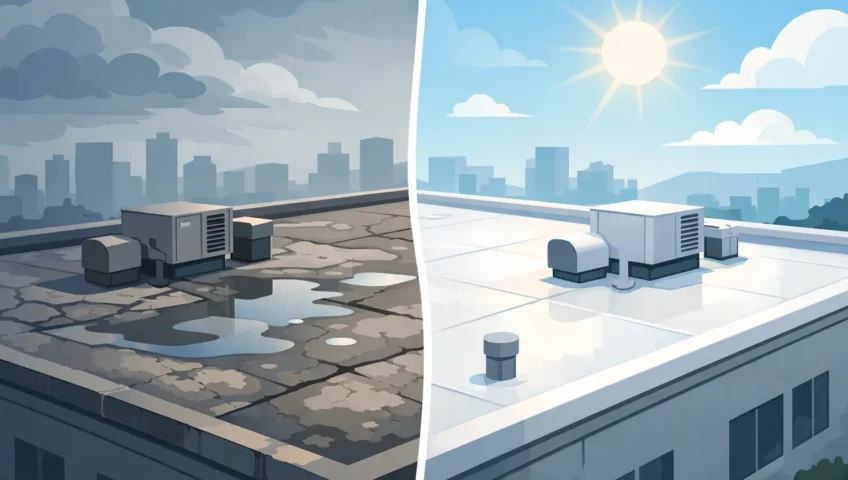
A useful roof coating before and after example shows far more than a change of colour. On a weathered roof in Glasgow or Lanarkshire, the real difference should be a clean, repaired and protected surface that is better prepared for rain, frost and ongoing exposure. A coating can make an ageing roof look remarkably smarter, but only when the roof underneath is still a sound candidate for restoration.
For homeowners, landlords and property managers, that distinction matters. Coating a roof that needs structural repair or replacement can hide a problem for a short time without solving it. A professional inspection should always come before promises of a dramatic finish.
What a roof coating before and after example should show
The before image will often show the effects of years of Scottish weather: moss growth, staining, faded tiles, patches of dirt and a dull, uneven appearance. You may also see minor defects such as cracked mortar around ridge tiles, damaged tile edges, loose fittings or worn areas around penetrations.
The after image should show clean roof lines, an even finish and a roof that looks cared for rather than simply painted over. There should not be moss trapped beneath the coating, flaking material around the edges or obvious defects left untreated. The best results look tidy and consistent while retaining the natural shape and detail of the roof.
Looks are only part of the story. A proper before-and-after example also represents work that cannot always be seen in a photograph: preparation, small repairs, drying time and careful application. Those are the stages that determine whether the result lasts.
A typical roof coating before and after example
Consider a concrete tiled roof that is 20 to 30 years old. The tiles remain generally sound, but their original protective surface has worn away. Moss has gathered on the shaded side, the roof looks patchy from street level, and rainwater is no longer shedding as cleanly as it once did. The owner may assume a full replacement is the only option.
Following an inspection, the contractor finds no major sagging, widespread tile failure or serious structural issue. A few broken tiles are replaced, ridge mortar is repaired where needed, and the roof is cleaned thoroughly. Once the roof is dry and prepared, a suitable coating system is applied in the chosen colour.
Before the work, the property can look tired and poorly maintained even if the roof is not at the end of its life. Afterwards, it can have a uniform finish that lifts the whole exterior. More importantly, the coating helps protect suitable tiles from further weathering and can reduce the speed at which dirt and moisture take hold.
That is where a coating offers genuine value. It can extend the useful life and improve the appearance of a serviceable roof at a fraction of the cost of a full reroof. It is not a shortcut around necessary repairs, but it can be a practical restoration option when the underlying roof is in good enough condition.
The work behind a convincing result
A roof coating is only as dependable as the preparation beneath it. Applying a fresh finish to a dirty, damp or damaged roof is likely to lead to poor adhesion and an uneven result. The roof needs to be assessed carefully first, including tiles or slates, ridges, flashings, valleys, gutters and roofline details.
The cleaning stage removes moss, algae, dirt and loose material. This must be carried out with care. High-pressure cleaning is not suitable for every roof, particularly older or fragile surfaces, because it can dislodge tiles, affect mortar or force water where it should not go. The right method depends on the roof covering, its age and its condition.
Once clean, the roof is checked again. Broken tiles are changed, loose ridge tiles are secured, and defects that could allow water into the roof are dealt with before coating begins. The surface must then be allowed to dry properly. In Scotland, that means planning around the weather rather than treating dry conditions as an afterthought.
A suitable primer or sealer may be required, followed by the coating itself. A professional team applies it evenly, paying close attention to edges, ridges and awkward areas. The result should be consistent, not thin in one section and heavy in another. Gutters and surrounding areas should also be left clean and clear when the job is complete.
When coating is not the right answer
A bright, even roof can be appealing, but an honest contractor will explain when coating is not the sensible investment. If there are widespread cracked or delaminating tiles, major leaks, rotten timbers, failing underfelt, extensive loose mortar or significant movement in the roof structure, repairs or replacement may be needed first.
The same applies to some older slate roofs. Natural slate can last for a very long time, but its condition must be assessed properly. A coating is not automatically appropriate simply because a roof looks old or has staining. In some cases, careful repairs and maintenance are the better route.
Flat roofs also need their own assessment. A coating system may be suitable for particular flat roofing materials and localised wear, but standing water, splits, failed seams or a compromised substrate need attention before any protective finish is considered. The goal is always a watertight roof, not a cosmetic cover-up.
Be cautious of anyone who gives a fixed answer from a photograph alone or recommends coating without checking the roof closely. A free written quote should set out the preparation, repairs and coating work included, so you know exactly what you are paying for.
How to judge the finished roof
The most obvious sign of a good job is an even appearance from ground level, with no missed patches, overspray or coating on windows, walls and gutters. But it is worth looking beyond the colour. Tiles should sit correctly, ridges should be secure, and gutters should be free-flowing after the work.
Ask what repairs were completed before coating and whether any areas require future monitoring. A reliable contractor should be clear about the condition of the roof, the product being used and any guarantee that applies to the completed work. Guarantees are most meaningful when they are backed by proper inspection and preparation, not just a polished sales promise.
It also helps to keep expectations realistic. A roof coating can refresh a faded, porous or moss-stained tiled roof and provide an important layer of protection. It cannot make failing roof timbers sound, correct poor drainage or turn severely damaged materials into a long-term solution.
Getting the right advice for your property
Every roof ages differently. A sheltered home in Hamilton may have a very different issue from an exposed commercial building or agricultural property, even when both have the same type of covering. Roof pitch, shade, nearby trees, previous repairs and drainage all affect whether restoration is worthwhile.
Varey Contracts Ltd can inspect the roof, explain the condition in plain terms and provide a free written quote for the work that actually makes sense. If coating is suitable, the focus should be on thorough preparation, necessary repairs and a finish built to protect the property as well as improve its appearance.
A good before-and-after result should give you confidence when you look up at the roof, but the real test comes later: a clean, secure surface that continues to do its job through the next spell of rain, wind and winter weather.


