

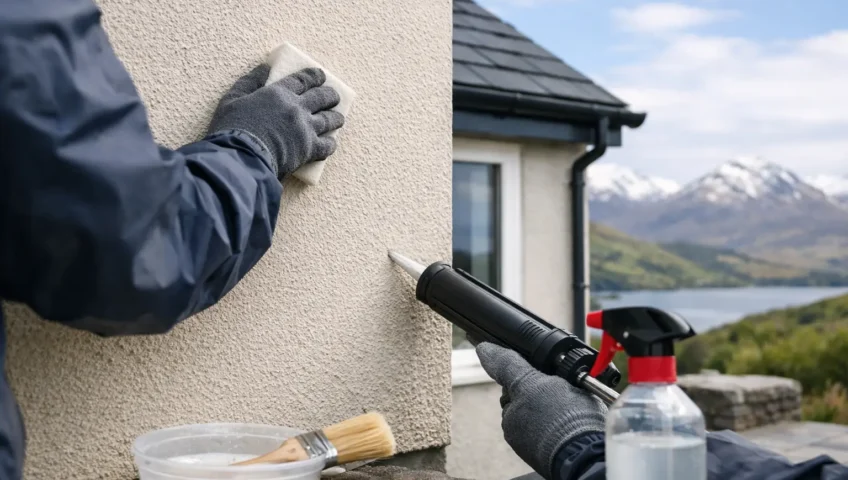
A small crack beside a window or a green stain on an outside wall can look harmless, but Scottish rain soon finds a way in. The best ways to protect rendered walls are not complicated, but they do need to be dealt with early. Regular checks, sound drainage and the right breathable coating can prevent a cosmetic issue becoming damp, loose render or costly internal repairs.
Rendered walls are exposed to everything the weather brings: driving rain, frost, changing temperatures, wind-blown dirt and organic growth. Whether you own a traditional home in Glasgow, a rental property in Lanarkshire or a commercial building with rendered elevations, protecting the surface helps preserve the building beneath it.
Why rendered walls fail
Render is designed to protect masonry while giving a clean, finished appearance. It is not indestructible. Over time, movement in the property, water running down from blocked gutters, leaking roof details or repeated freeze-thaw cycles can cause cracks and weak patches.
Once water gets behind the render, it may remain trapped against the wall. In colder weather, that moisture freezes and expands, widening cracks and forcing render away from the masonry. This is why a minor defect can turn into hollow-sounding, blown or crumbling render surprisingly quickly.
The right solution depends on the type and age of the render. Older cement-based finishes, modern acrylic systems and lime render do not all behave in the same way. A coating that works well on one wall could trap moisture in another, so diagnosis matters before any work begins.
1. Keep gutters, downpipes and roof edges in good order
Many rendered wall problems start above the wall itself. An overflowing gutter, leaking joint or missing roof tile can repeatedly soak the same area of render. You may notice dark streaks, algae, peeling paint or a damp patch indoors beneath the affected section.
Clear leaves and moss from gutters, particularly after autumn and before winter. Check that downpipes are securely connected and discharge into a working drain rather than spilling against the base of the property. Also look at soffits, fascias, flashing and roof valleys. These details direct water away from walls, and a defect here can undermine an otherwise sound rendered finish.
If staining always returns in the same place after cleaning, do not simply repaint it. Find the source of the water first.
2. Repair cracks before rain gets behind the render
Hairline cracks are common, especially around windows, doors and extensions where different parts of a building move at slightly different rates. Not every fine surface line means serious structural trouble, but it should still be monitored and sealed where appropriate.
Cracks wider than a hairline, cracks that are growing, or areas where the render sounds hollow when gently tapped need professional attention. The loose material may need to be removed back to a firm edge before a compatible repair is applied. Filling over blown render is a short-lived fix and often fails after the first hard winter.
Pay close attention to corners, window reveals, external pipe fixings and the join between old and newer parts of a building. These are common entry points for water. A proper repair should blend with the existing finish and allow the wall to perform as it should.
3. Clean algae, moss and dirt carefully
Green algae and black staining hold moisture against the render. They also make it harder to spot cracks and early deterioration. Cleaning the wall periodically improves kerb appeal, but the method is as important as the result.
High-pressure washing can damage weak render, strip protective coatings and drive water into existing cracks. It is particularly risky on older or already weathered surfaces. A suitable biocidal wash and a low-pressure cleaning method are usually safer, provided the product is compatible with the render and surrounding surfaces.
Moss and algae often grow most heavily on north-facing walls, sheltered elevations and areas below overflowing gutters. Treating the growth is worthwhile, but correcting shade, drainage or water run-off issues gives longer-lasting results.
4. Choose a breathable wall coating, not a quick cover-up
A quality exterior wall coating can be one of the most effective ways to protect a sound rendered wall from rain, UV exposure and dirt. It can refresh the appearance of the property and reduce how readily water is absorbed into the surface.
The key word is breathable. Walls need to let water vapour escape from within while resisting rain from outside. Applying an unsuitable, non-breathable paint or thick sealant can trap moisture behind the surface. That may lead to bubbling, flaking, damp and further render failure.
Before coating, the wall must be clean, dry and properly repaired. A good contractor will assess the substrate, prepare damaged areas and use a system suited to the render type. Coating over cracks, algae or damp patches may improve the look for a short time, but it will not solve the cause.
5. Protect the base of the wall from splashback
The bottom section of a rendered wall takes a lot of punishment. Rain splashes up from paths and driveways, soil can bridge the damp-proof course, and plants can hold moisture against the property. Over time, this can leave the lower render stained, cracked or detached.
Keep soil, bark and raised planting beds below the damp-proof course. Avoid piling gravel or paving directly against the render, and make sure paths slope away from the building where possible. If a hard surface channels rainwater towards the wall, drainage improvements may be needed.
This is especially relevant where driveways or patios have been renewed. A smart-looking surface that sits too high can create a damp problem at the base of the wall.
6. Check for movement and deal with it honestly
Render cracks can result from normal seasonal movement, but they can also point to a problem with masonry, lintels, failed seals or structural settlement. The best protection is not to hide the evidence.
Take clear photographs of any crack and check it again over the following weeks. If it is widening, runs in a stepped pattern through brickwork, appears alongside sticking doors or windows, or is accompanied by internal cracking, seek advice promptly. The underlying issue should be understood before any render repair or coating is specified.
For minor movement, flexible repair materials and compatible coatings can help. Where the cause is more serious, the repair needs to begin with the building fabric rather than the decorative finish.
7. Do not ignore roof and chimney defects
A rendered gable wall can be in excellent condition and still suffer if the roof above it is leaking. Damaged verge mortar, cracked chimney render, slipped slates, broken tiles and failing flashing can all introduce water behind or onto external wall finishes.
Look for damp staining at the top of a wall, discoloured render below a chimney, loose material around roof edges and recurring algae beneath gutters. Addressing roofing and wall issues together is often more cost-effective than treating each symptom separately. It also reduces the risk of paying for a wall coating only to have water spoil it from above.
8. Arrange a regular exterior inspection
Most render damage is cheaper to repair when it is localised. A yearly external check, ideally after winter, allows you to catch early signs such as cracks, flaking, hollow patches, failed sealant, blocked gutters and water staining.
Walk around the property after heavy rain if it is safe to do so. Look for overflowing gutters, water pouring from joints, wet patches that remain long after the rain stops and areas where the wall appears darker than the rest. These observations give a contractor useful clues and can speed up diagnosis.
Landlords and commercial property managers should keep a simple record of inspections and repairs. It helps demonstrate that maintenance has been carried out and makes it easier to spot recurring problems on exposed elevations.
When to call a professional about rendered walls
It is sensible to get a professional assessment when render is loose, cracks are spreading, damp is appearing indoors, or a wall has persistent staining despite cleaning. The same applies if you are considering a wall coating but are unsure whether the render underneath is sound.
At Varey Contracts Ltd, we assess the whole area around the problem, including gutters, roofline and roof details where needed, rather than treating visible damage in isolation. A free written quote gives you a clear picture of the repair or restoration work required before you commit.
A rendered wall does not need to look badly damaged to need attention. Dealing with a small defect while the weather is fair can save your property from a far bigger repair after the next spell of wind, rain and frost.


