

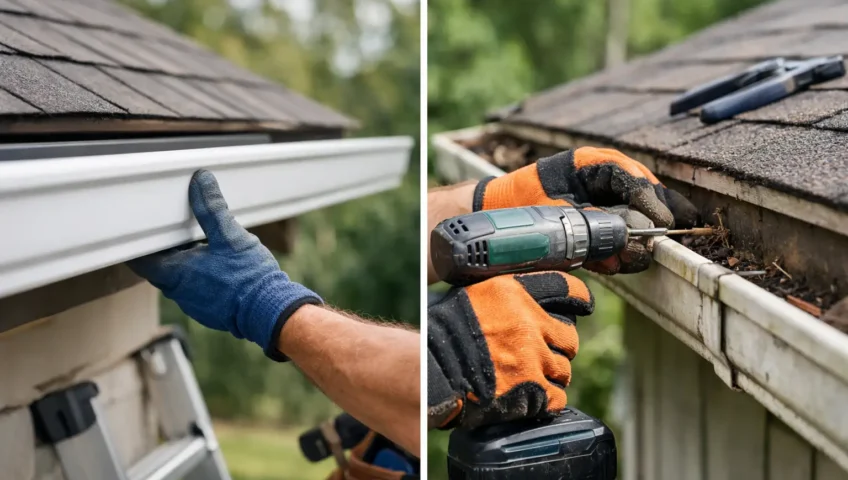
Water overflowing above the front door, a damp patch on an outside wall, or a gutter that has started to sag after winter are not issues to leave until later. In Glasgow and Lanarkshire, regular rain, wind and freeze-thaw weather can turn a small gutter fault into damaged brickwork, rotten roofline timber or a leak inside the property. The choice between gutter replacement versus gutter repair comes down to the condition of the system, not simply the quickest-looking fix.
A sound repair can save money and give an existing gutter many more years of service. But repeatedly patching a gutter that is cracked, badly pitched or at the end of its life can cost more in the long run. A proper inspection should identify the source of the problem and recommend the work that genuinely protects your property.
When gutter repair is the sensible choice
Gutter repairs are often the right answer when damage is localised and the rest of the system remains secure. A slipped bracket, leaking joint, blocked downpipe or short section of damaged gutter does not automatically mean the whole run needs replaced.
For example, water may be spilling over because leaves, moss and roof debris have collected at the outlet. Once the gutter and downpipe are cleared, water can flow away as intended. Similarly, a joint can often be resealed or replaced, and loose brackets can be secured before the gutter begins pulling away from the fascia.
Repair is usually worth considering where the gutter is otherwise in good condition, the falls are correct, and there are no widespread cracks or signs of ageing. It is also a practical option after storm damage, when one section has been knocked out of alignment but neighbouring sections are unaffected.
A targeted repair can deal with problems such as:
- Leaking unions, stop ends or outlets
- A loose or broken gutter bracket
- One cracked length of uPVC guttering
- A blockage in the gutter or downpipe
- A downpipe that has become detached or damaged
The key point is that the repair must address the cause. Resealing a joint may stop a drip, but it will not solve a gutter that is holding standing water because it has dropped out of line.
Signs your gutters may need full replacement
Replacement becomes the better investment when faults are appearing across several sections or the guttering can no longer be fixed securely. Older systems may become brittle, particularly after years of exposure to weather and temperature changes. Cast iron can corrode, while uPVC can crack, warp or fade over time.
Look closely at recurring leaks. If you have had several joints repaired and water still runs down the walls during heavy rain, there may be a wider issue with the pitch, capacity or condition of the gutter run. Constant standing water is another warning sign. Gutters need a slight fall towards the outlet, so water that remains in one area can point to sagging brackets, distorted lengths or poor installation.
Replacement is normally recommended if the guttering is extensively cracked, heavily corroded, pulling away from the building or visibly bowed along long sections. It may also make sense during a wider roofing, soffit and fascia project. Replacing tired guttering at the same time can prevent disruption later and gives the roofline a clean, consistent finish.
Damage to walls and roofline should change the decision
Gutters do more than collect rainwater. They direct it safely away from the walls, roof edge and foundations. When water continually spills over, it can stain render, encourage damp, damage pointing and put pressure on fascias and soffits.
If failed guttering has already caused rotten timber behind the gutter line, simply fitting another bracket may not be enough. The timber or roofline needs assessed, repaired where necessary and then fitted with guttering that is properly supported. This is where a full-service roofing contractor can be particularly useful, as the work can be looked at as one job rather than a series of temporary fixes.
Gutter replacement versus gutter repair: the cost question
The cheapest quote is not always the lowest-cost outcome. A small repair will naturally cost less upfront than replacing several lengths of guttering, but it should still offer a sensible lifespan. If repairs are needed every few months, replacement may be the more cost-effective route.
The price of either option depends on access, the height of the property, gutter material, the length involved and whether fascias, soffits or downpipes also require attention. A simple leak at a low-level rear extension is very different from replacing guttering around a large two-storey property with difficult access.
It is also worth considering the cost of doing nothing. Overflowing water can lead to much more expensive external and internal repairs than a gutter repair completed promptly. The right contractor should explain what is urgent, what can wait and why, then provide a clear written quote before work starts.
The checks that lead to the right recommendation
A proper gutter inspection should not be based on a quick glance from ground level. The system needs checked for blockages, breaks, loose fittings, poor falls and evidence of water damage around the roofline.
The condition of the roof matters too. Moss, loose slate fragments, failing mortar or debris from nearby trees can repeatedly block otherwise sound gutters. Clearing the gutter alone will not provide a lasting answer if debris is continually washing down from the roof.
An experienced team will also check whether the gutter size suits the roof area. On larger roofs, commercial buildings or agricultural units, undersized guttering can overflow in a downpour even when it is clean and undamaged. In that case, upgrading the gutter profile or improving the drainage layout may be more effective than another repair.
Choosing materials and making replacement last
Most domestic properties now use uPVC guttering because it is durable, low-maintenance and available in colours that work with modern roofline products. Black, white and anthracite grey are common choices, although the best option depends on the style of the property and existing fascias.
Good installation matters as much as the material. Gutters need enough brackets, correctly sealed joints and the right fall towards each outlet. Downpipes should be firmly fixed and positioned to direct water into suitable drainage, rather than allowing it to collect at the base of a wall.
If replacement is needed, it is worth asking whether the fascias and soffits are still sound. New gutters fixed to deteriorating timber will not solve the underlying issue. Replacing worn roofline boards with quality PVC can reduce future maintenance and provide a secure base for the new system.
Do not wait for the next heavy rainfall
Gutter faults often seem minor in dry weather. The real test comes when sustained rain hits and water starts running where it should not. Checking your gutters after a spell of bad weather, especially in autumn and winter, can catch a problem before it affects the building fabric.
Varey Contracts Ltd provides practical guttering inspections, repairs and replacements across Glasgow, Hamilton and surrounding areas. Whether the answer is a straightforward repair or a complete new gutter system, the aim should be clear: stop water causing further damage and give you a solution that represents good value. Request a free written, no-obligation quote and get the condition of your guttering properly assessed before a small issue becomes a bigger property repair.

