

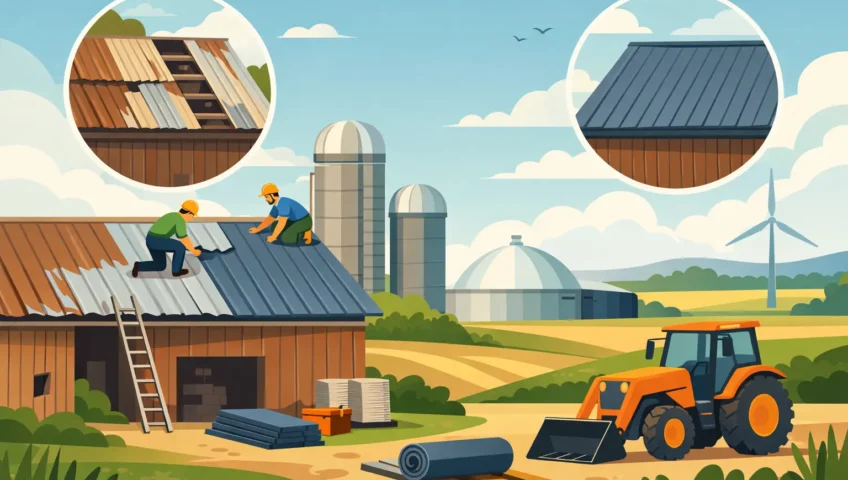
A leaking shed roof rarely stays a small problem for long. What starts as a few drips can turn into spoiled feed, damaged machinery, unsafe electrics and a building that is no longer fit for stock or storage. That is why agricultural roof replacement needs to be looked at properly, not patched over again and again until the cost climbs higher than it should.
Farm buildings take a beating. Constant exposure to wind, rain and temperature changes is hard enough, but agricultural roofs also deal with internal moisture, corrosion from livestock environments and years of wear from heavy use. On some buildings, a careful repair will buy you time and save money. On others, replacement is the better investment because the roof has reached the point where ongoing repairs stop making financial sense.
When agricultural roof replacement is the right move
The big question is simple: can the roof still be restored, or is it finished? The answer depends on the age of the roof, the type of sheets or coverings in place, the condition of the fixings and supports, and how widespread the damage is.
If leaks are isolated and the rest of the roof is sound, repairs can often deal with the issue effectively. Replacing damaged sheets, resealing vulnerable areas and sorting flashings may be enough to keep the building weather-tight. This is especially true where the structure underneath is still in good order.
Replacement becomes more likely when problems are appearing across the whole roof rather than in one section. Common warning signs include repeated leaks in multiple areas, visible corrosion, loose or failing fixings, sagging lines, cracked roof sheets, persistent damp inside the building and daylight showing through where it should not. If previous patch repairs have already been carried out several times, that is usually a sign the roof is no longer giving reliable service.
There is also the issue of safety. Older agricultural buildings can have roofing materials that need specialist handling and replacement planning. In those cases, the job is not just about stopping leaks. It is about making the building safer and more practical for daily use.
Repair or agricultural roof replacement?
This is where honest advice matters. Not every roof needs to be stripped and replaced, and not every repair is money well spent. A good contractor should look at the whole roof and tell you clearly what condition it is in, what can be saved and what cannot.
Repairs usually make sense when the fault is local, the roof still has useful life left in it and the building does not need wider upgrade work. This can be the most cost-effective route, particularly for owners who want to control spending while keeping the building operational.
A full agricultural roof replacement is usually the stronger option when the roof is at the end of its service life, when leaks are disrupting the use of the building, or when repair costs are starting to stack up every season. Spending less now can sometimes mean spending far more over the next few years. That is why the cheapest quote is not always the cheapest decision.
For many farm owners, the best value comes from weighing immediate cost against long-term reliability. A replacement roof costs more upfront, but it can reduce future call-outs, protect what is stored inside and give you confidence through the worst of the weather.
What affects the cost?
No two agricultural buildings are exactly the same, so roofing prices vary. Size is an obvious factor, but it is not the only one. Roof pitch, access, the type of materials being removed, the condition of the supporting structure and the specification of the new roof all affect the final cost.
If the roof covering is failing but the structure beneath is sound, the project is usually more straightforward. If timbers, purlins or other structural elements have deteriorated, extra work may be needed before the new roof can go on. That changes both labour and material costs.
The use of the building matters too. A machinery store, livestock unit and feed shed may each need a slightly different approach. Ventilation, condensation control and durability should all be considered properly rather than choosing materials on price alone.
This is why written quotes matter. A proper inspection should identify what is actually needed, not just give you a rough number based on square metreage. Clear pricing helps you compare like for like and avoid nasty surprises once work starts.
Choosing the right roofing system
The best replacement roof is the one that suits the building and how you use it. In agricultural settings, durability and practicality are usually more important than appearance. The roof needs to cope with the Scottish climate, resist ongoing wear and provide dependable protection year after year.
Sheeted systems are common for obvious reasons. They are efficient to install, suitable for large spans and available in options designed to improve weather resistance and lifespan. Depending on the building, insulation and anti-condensation measures may also be worth considering. This is particularly important where moisture build-up could affect stored goods, equipment or animal welfare.
There is always a balance to strike. A more basic specification may keep the initial cost down, but if the building is in regular use or contains valuable equipment, a better-performing roof can be the wiser choice. The right advice should reflect how the building works in practice, not just what looks cheapest on paper.
Why timing matters more than most owners expect
Leaving roof problems too long rarely saves money. A small leak can spread into insulation, timbers, internal fittings and the contents of the building. Water ingress can also create slip hazards, affect electrics and make day-to-day use much harder.
On farms and rural properties, delays can be especially frustrating because buildings are often central to operations. If a roof failure starts affecting storage, livestock areas or machinery protection, the knock-on cost can go beyond the roof itself. Replacing the roof before it reaches that point is often the better commercial decision.
Timing also matters because access and weather conditions can affect scheduling. Planning ahead gives you more control over when the work is done and helps reduce disruption. Waiting until the damage is urgent usually limits your options.
What to expect from the replacement process
A well-run project should start with a thorough site inspection and a clear explanation of what is needed. You should know whether the roof covering alone is being replaced or whether supporting elements also need attention. You should also know what materials are being used, how long the work is likely to take and how the site will be managed safely.
For agricultural buildings, practicality is key. The work should be planned around access, daily operations and the use of the building wherever possible. Good roofing teams understand that you may still need parts of the site functioning during the job. Clear communication makes a big difference.
Once work begins, preparation and safe removal are just as important as the new installation. The finished roof should be secure, weather-tight and fitted to a standard that gives you lasting value, not a short-term fix dressed up as a major job.
Getting the decision right
The worst time to think seriously about your roof is after another bad spell of weather has already exposed the damage. If you have an agricultural building with recurring leaks, visible deterioration or a roof that looks tired across large sections, it is worth getting it assessed now.
Sometimes the right answer will be a targeted repair. Sometimes a coating or restoration approach can extend the life of the roof and avoid immediate replacement. And sometimes the most sensible step is a full agricultural roof replacement because the building needs dependable protection again. The key is having the roof inspected by experienced contractors who will tell you the truth about what condition it is in.
For owners across Glasgow, Hamilton, Lanarkshire and surrounding parts of Scotland, that practical approach matters. You want a contractor who responds quickly, explains the options clearly and gives you a free written quote based on the actual building in front of them. That is exactly the sort of service Varey Contracts Ltd is built around.
If your farm building roof is starting to fail, do not wait for the next leak to make the decision for you. A clear inspection now can save money, protect the building and help you plan the right work with confidence.


