

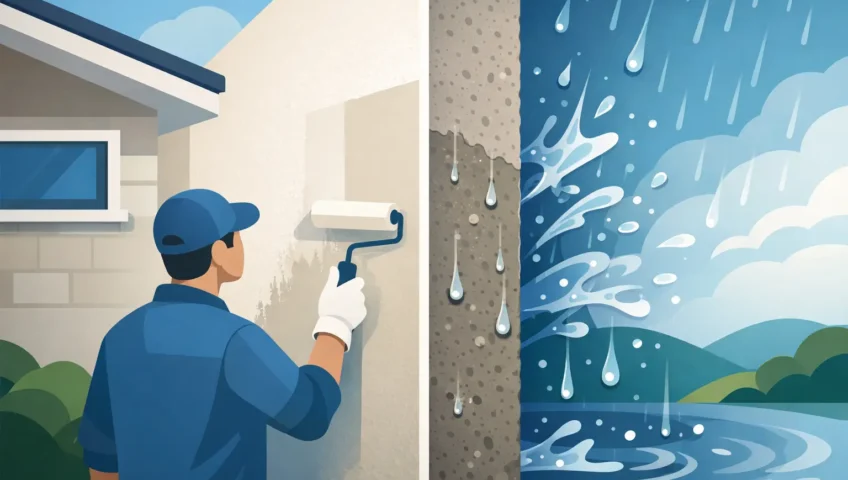
A wet patch on an external wall is rarely just a cosmetic problem. In Scotland’s persistent rain, wind and frost, moisture can work its way into tired render, cracked masonry and failed joints, leaving walls looking stained and allowing damage to build beneath the surface. So, are wall coatings waterproof? A quality exterior wall coating can provide a highly water-resistant protective barrier, but it is not a shortcut for fixing an active leak, structural crack or failed roofline.
The right coating can be an excellent, cost-effective way to refresh and protect suitable exterior walls. The key is diagnosing why the wall is getting wet before any coating is applied. That is where experienced workmanship makes all the difference.
Are wall coatings waterproof in all conditions?
Most professional exterior wall coating systems are designed to stop rainwater soaking into the surface while still allowing water vapour within the wall to escape. This is often described as being waterproof and breathable, although the precise performance depends on the product, the substrate and the preparation work.
That breathable element matters. Brickwork and render can hold a small amount of moisture, particularly after prolonged wet weather. A suitable coating should reduce rain penetration without trapping that moisture behind an impermeable layer. If water is sealed in, it can contribute to blistering, peeling, frost damage and ongoing damp concerns.
A properly specified coating can help protect external render, pebble dash, brick, concrete and other masonry surfaces from driving rain. It may also reduce dirt build-up and improve the appearance of a faded, patchy elevation. However, no coating can make every wall permanently waterproof if there are defects allowing water in from elsewhere.
For example, a leaking gutter overflowing down the wall, loose roof tiles, damaged flashing or a cracked window sill can all create damp patches that a wall coating alone will not solve. The source must be repaired first.
What a good wall coating is designed to do
Wall coatings do more than change the colour of a property. When applied to a sound, prepared surface, they create a protective outer layer that helps rainwater run off rather than absorb into porous masonry or old render.
This can be particularly valuable on exposed properties across Glasgow, Hamilton and Lanarkshire, where wind-driven rain puts external walls under pressure for much of the year. It can also help slow down weathering caused by repeated wet and dry cycles, UV exposure and winter frost.
A suitable system may help to:
- reduce rain penetration through porous external surfaces;
- protect render and masonry from further weathering;
- cover minor surface imperfections after the correct repairs;
- improve kerb appeal with a clean, consistent finish; and
- reduce the need for frequent repainting compared with ordinary masonry paint.
The biggest benefit is prevention. Coating a wall before minor surface wear becomes widespread cracking or moisture damage can save money on larger repairs later. That said, a coating should only ever be part of a sensible maintenance plan, not a cover-up for defects.
When a wall coating will not fix the problem
If you can see damp internally, it is tempting to assume rain is coming straight through the external wall. Sometimes that is true, but there are several other possibilities. Condensation, rising damp, plumbing leaks, blocked gutters, roof defects and poor drainage can create similar symptoms.
External cracking also needs a proper assessment. Hairline cracks in render may be repairable as part of the coating preparation process. Larger cracks, movement cracks or areas where render is loose and hollow must be dealt with before a finish is applied. Painting or coating over unstable render is a short-term cosmetic fix at best, and the problem will usually return.
The same applies to brickwork with damaged pointing. If mortar joints are open or crumbling, rain can pass through the wall face and into cavities or internal spaces. Repointing or targeted masonry repair may be needed before considering a coating.
Walls below ground level, retaining walls and surfaces affected by rising damp need a different solution. Exterior wall coatings are not a replacement for tanking, damp-proofing work, drainage improvements or repairs to failed damp-proof courses.
Preparation determines whether the coating lasts
The coating itself is only one part of the job. A long-lasting result depends heavily on the condition of the wall and the preparation carried out beforehand.
First, the surface needs to be inspected for cracks, loose render, failed sealant, algae, moss and signs that water is entering from gutters, roof edges or openings around windows and doors. Any underlying issues should be identified and repaired rather than hidden.
The wall then needs thorough cleaning. Dirt, biological growth and loose paint can stop a coating adhering correctly. Depending on the surface, this may involve careful pressure washing, treatment for moss or algae, and allowing adequate drying time before work continues. Applying a coating to a damp, dirty wall is a common reason for early failure.
Repairs come next. Cracks should be opened, filled and reinforced where required, while loose or damaged render needs to be removed and made good. Primers, base coats and reinforcement materials may be needed depending on the system and the surface condition.
Only then should the chosen wall coating be applied at the correct thickness and in suitable weather conditions. Rain, very low temperatures and poor drying conditions can affect the finish, which is why an experienced contractor will plan the work around the forecast rather than rushing it.
Wall coating versus ordinary masonry paint
Not every painted wall has a wall coating system. Standard masonry paint is often cheaper initially and can improve the look of a property, but it may not offer the same level of protection, flexibility or service life as a specialist coating.
A professional coating is generally thicker and designed to cope better with rain and small movements in the substrate. Some systems have flexible properties that help bridge very fine, non-structural cracks. This can be useful on ageing render, provided the wall is otherwise stable and all significant defects have been repaired.
Ordinary paint can still be suitable for a sound wall that mainly needs a cosmetic refresh. It is usually the more economical option where there is no particular concern about rain penetration. A wall coating may be the better investment where the surface is exposed, tired, porous or repeatedly needing repainting.
The right choice depends on the wall, the cause of any moisture issue and your budget. A reputable contractor should explain the options clearly rather than recommending the most expensive route by default.
Signs your property may benefit from wall coating work
Fading, patchy colour and surface staining are obvious reasons to consider a new finish, but protection is usually the more important issue. Look out for render that darkens quickly after rain, recurring algae growth, flaking masonry paint, fine surface cracks or exposed walls that feel persistently cold and damp inside.
It is also worth looking up. Overflowing gutters, failed downpipes, damaged soffits or roof defects often cause water staining on walls. Fixing these issues promptly protects both the wall coating and the building underneath it.
For landlords and commercial property managers, planned exterior maintenance can also avoid disruptive reactive repairs. Treating one elevation before water damage spreads is often far more manageable than waiting until internal decoration, insulation or plasterwork is affected.
Get the diagnosis right before you coat
Wall coatings can provide reliable protection against rain and improve the appearance of a property, but they work best on walls that have been repaired and properly prepared. If the issue is a roof leak, blocked gutter, cracked render or damaged pointing, that work should come first.
Varey Contracts Ltd can inspect exterior wall defects alongside roofline, guttering and roofing issues, helping property owners avoid paying for a finish that does not address the real cause. A free written quote gives you a clear view of the repairs and coating work required, with no obligation to proceed.
If your walls are showing damp staining, peeling paint or weather damage, act before another wet season makes the repair more extensive. A professional inspection can turn an uncertain problem into a practical plan for protecting your property.


