

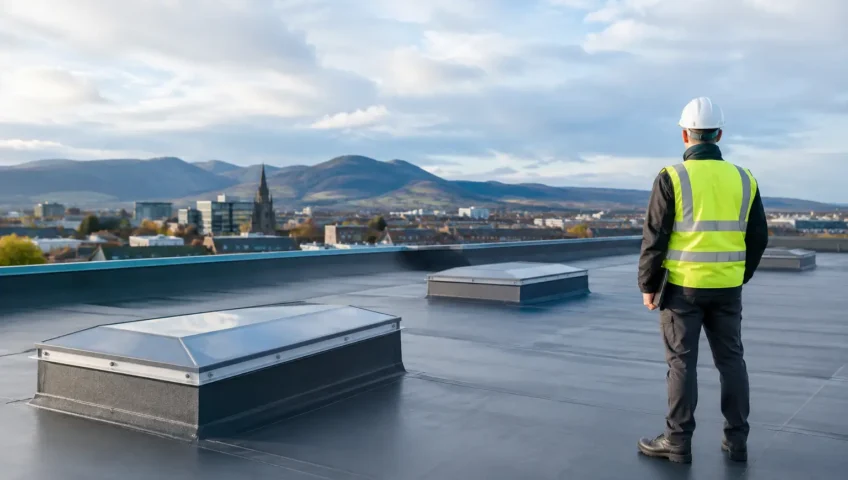
A commercial roof has to do more than keep out the rain. It protects stock, equipment, tenants, staff and the day-to-day running of your building. In Glasgow and across Lanarkshire, frequent rain, wind exposure and changing temperatures can quickly expose weaknesses in an ageing roof. Choosing the best commercial roof systems means looking beyond the lowest installation price and considering drainage, building use, maintenance needs and the condition of the existing structure.
For many property owners, a full replacement is not always the first or best answer. A targeted repair, overlay or roof coating can provide reliable protection at a lower cost when the roof structure remains sound. The right option starts with a proper inspection and clear advice on what your roof actually needs.
What Makes a Commercial Roof System Right for Your Building?
There is no single system that suits every commercial property. A small retail unit, warehouse, office block, workshop and agricultural building all place different demands on their roof. The best choice depends on the roof design, the amount of foot traffic it receives, how water drains away and how long you need the solution to last.
A flat or low-pitched roof needs particular attention. Standing water is one of the main causes of premature failure, so falls, outlets, gutters and edge details matter just as much as the waterproofing material itself. If water has been sitting on the roof after rainfall, addressing drainage should be part of the work rather than simply covering over the issue.
Access also matters. Plant equipment, solar panels, air-conditioning units and regular maintenance routes can all cause wear. A roof that sees regular contractor traffic needs a system capable of handling it, with suitable walkways where required.
The Best Commercial Roof Systems to Consider
Single-ply membrane roofing
Single-ply membranes are a popular option for large flat roofs, including offices, schools, industrial units and retail premises. The material is supplied in wide sheets and mechanically fixed, adhered or ballasted depending on the project.
Its main benefit is a clean, lightweight finish with relatively quick installation across large areas. Good-quality single-ply systems can provide dependable waterproofing and work well where a building needs a modern replacement without adding excessive weight to the roof deck.
The detail work is critical. Seams, roof penetrations, outlets and perimeter edges must be installed properly, as these are the areas where leaks are most likely to develop. This system is often a strong choice for a straightforward flat roof, but it should be specified around the building rather than chosen on material cost alone.
Built-up felt roofing
Modern built-up felt roofing is far removed from the basic felt coverings many people associate with older sheds and garages. It uses multiple layers of reinforced bitumen membrane, usually finished with a mineral cap sheet, to create a durable waterproof surface.
It remains one of the most practical commercial roofing options for smaller and medium-sized flat roofs. Built-up felt is versatile around awkward shapes, rooflights, pipes and upstands, making it useful on buildings where the roof has plenty of details to work around.
A properly installed felt system can offer excellent value, particularly when replacing an old failed covering. It can also be suitable for an overlay where the existing roof is dry, stable and checked carefully beforehand. If trapped moisture or damaged decking is present, simply laying a new surface over it will not solve the underlying problem.
Liquid roof coatings
Liquid-applied systems are particularly useful where replacement would be disruptive or unnecessarily expensive. The coating is applied directly to the prepared roof surface, forming a continuous waterproof membrane once cured.
This approach is well suited to complex roofs with pipework, vents, rooflights and difficult junctions. Because there are no large sheets or seams across the roof field, liquid systems can provide a neat solution around details that are challenging to cover with traditional membranes.
Preparation is everything. The surface must be clean, dry and stable, while cracks, blisters and failed sections need to be repaired before coating begins. A coating is not a shortcut for a roof with widespread structural failure, but it can extend the service life of a suitable roof and help avoid the cost and disruption of a full strip-off.
Metal roofing systems
Metal roofing is common on factories, warehouses, farm buildings and commercial units with pitched or low-pitched profiles. Steel and aluminium sheets are durable, lightweight and capable of covering large spans efficiently.
For industrial and agricultural properties, metal can be an excellent long-term option. It is particularly effective where fast water run-off is needed and where the building design suits profiled sheeting. Insulated composite panels can also improve thermal performance, which may help make the building more comfortable and reduce heat loss.
The trade-off is that fixings, laps, flashings and cut edges need routine checking. Corrosion around fixings, damaged sheets and failed seals can allow water into the building before the issue is obvious from ground level. In many cases, local repairs and specialist roof coatings can restore protection without replacing every sheet.
GRP fibreglass roofing
GRP, often called fibreglass roofing, creates a tough seamless surface and is widely used on smaller flat roofs, extensions and commercial units with limited roof areas. It can deliver a smart, hard-wearing finish with good resistance to weathering.
It is generally better suited to smaller roof sections than very large commercial roofs. The substrate needs to be stable, and installation conditions need to be right for the material to cure properly. Where it fits the building, GRP can be a dependable, low-maintenance choice.
Repair, Overlay or Full Replacement?
This is often the most valuable question a commercial property owner can ask. A leak does not automatically mean the whole roof needs replaced. Localised defects around flashings, seams, outlets or damaged sheets can often be repaired quickly before water spreads into insulation, decking or internal finishes.
An overlay may be suitable when the existing roof is generally sound but nearing the end of its life. It can reduce labour, waste and downtime because the old covering does not always need removed. However, the existing roof must be surveyed first. Covering a wet roof, unstable deck or significant trapped damage can lead to more costly problems later.
Full replacement is normally the sensible option when there is widespread deterioration, repeated leaks in different areas, saturated insulation, serious corrosion or damage to the structural deck. Although it costs more at the outset, replacement gives the opportunity to correct falls, upgrade insulation and install a system designed for the building’s future use.
Do Not Overlook Drainage and Roof Maintenance
Even the best commercial roof system will struggle if water has nowhere to go. Blocked outlets, overflowing gutters, damaged downpipes and poor roof falls can leave water sitting against seams and flashings for days. That adds unnecessary strain to the waterproofing and can speed up failure.
Regular maintenance is a straightforward way to protect your investment. A commercial roof should be inspected after severe weather and checked periodically for debris, moss growth, loose flashings, damaged seals and ponding water. Early repairs are normally far more affordable than dealing with water-damaged insulation, ceilings or stock.
Property managers should also keep a record of inspections, repairs and any recurring issues. This helps identify whether a problem is isolated or whether the roof is reaching the point where planned renewal is more cost-effective than repeated call-outs.
Getting a Clear Commercial Roofing Quote
A useful roofing quote should explain the condition of the existing roof, the work required and the system being proposed. It should not rely on vague wording or assume that every roof needs a full replacement. Ask whether drainage repairs, insulation, edge details, waste removal and access requirements are included, as these can affect the final cost.
For commercial properties across Glasgow, Hamilton and the surrounding areas, Varey Contracts Ltd can inspect the roof, identify the cause of the problem and provide a free written, no-obligation quote. Whether the right answer is a prompt repair, a protective coating or a complete new roof, clear workmanship and a suitable guarantee give you confidence in the work.
A roof is easiest to manage when small faults are dealt with before they become major disruption. If your commercial roof is leaking, holding water or showing signs of wear, arranging an inspection now can protect the building, your budget and the people who rely on it.


