

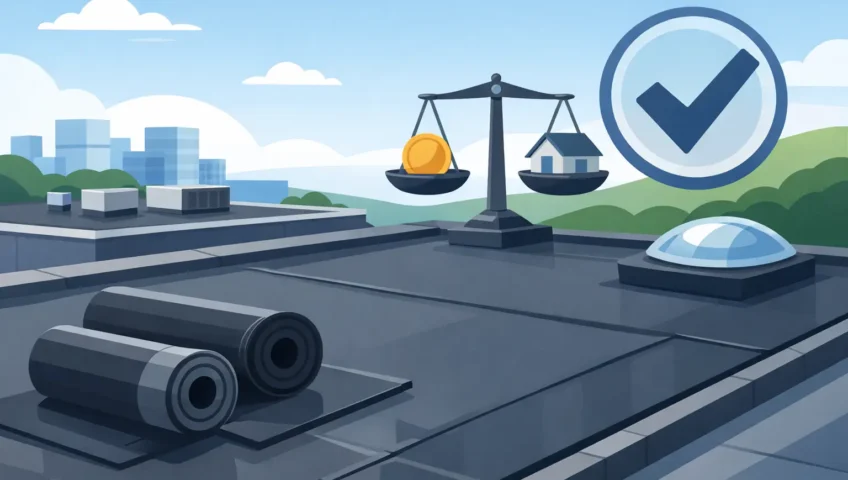
A flat roof usually only gets your full attention when it starts letting water in. That is why an honest epdm rubber roofing review matters. If you are weighing up repair against replacement, or comparing materials for a garage, extension, commercial unit or outbuilding, EPDM is one of the options that comes up again and again for good reason.
EPDM stands for ethylene propylene diene monomer, but most property owners simply know it as rubber roofing. In practical terms, it is a durable single-ply membrane used on flat and low-slope roofs. It has built a strong reputation because it handles wet weather well, lasts for years when fitted properly, and generally needs less upkeep than older felt systems. Still, it is not the right answer for every roof, and that is where a realistic review is useful.
EPDM rubber roofing review: the main strengths
The biggest selling point with EPDM is longevity. A well-installed system can last decades, which makes it attractive if you want a flat roof that is built to stay put rather than something that needs frequent patching. In Scotland, where roofs need to cope with persistent rain, cold snaps and strong winds, that long-term reliability matters.
Another clear advantage is flexibility. EPDM can expand and contract with temperature changes without becoming brittle in the same way some older materials can. That helps reduce cracking over time. On domestic roofs, that often means fewer weak spots developing as the seasons change.
It is also lighter than many people expect. That can be helpful on garages, extensions and certain outbuildings where you want a dependable roof covering without putting unnecessary strain on the structure. Because it often comes in large sheets, there are fewer seams too, and fewer seams usually means fewer places for water to try its luck.
From a maintenance point of view, EPDM is fairly straightforward. It does not demand constant attention, and when installed on a suitable deck with proper edge detailing, it gives a clean, tidy finish. For homeowners and landlords, that lower-maintenance appeal is often as important as lifespan.
Where EPDM works best
EPDM is particularly well suited to flat roofs on house extensions, dormers, garages, garden rooms and some commercial buildings. It is a strong choice when the roof shape is relatively simple and the installer can use large, uninterrupted sheets.
That simplicity is one of the reasons it can be cost-effective over the life of the roof. You are not just paying for the material itself. You are paying for how often it is likely to need attention, how well it resists standing water, and how dependable it remains through bad weather.
On agricultural buildings and larger units, EPDM can still work well, but the exact specification matters more. Foot traffic, roof penetrations, drainage layout and exposure all need to be considered properly before deciding if it is the right fit.
The trade-offs to know before you choose it
No roofing material is perfect, and any proper EPDM rubber roofing review should be honest about that. The first point is appearance. EPDM is practical rather than decorative. On a flat roof this is rarely a deal-breaker, but if visual finish is a major factor, some clients prefer the look of alternatives such as GRP fibreglass.
Installation quality is another big factor. EPDM performs well when fitted by experienced roofers who prepare the deck correctly, use the right adhesives, and pay close attention to trims, joints and upstands. Poor fitting can lead to lifting edges, trapped moisture issues or premature failure. In other words, the material is good, but it is not foolproof.
It can also be punctured if treated badly. General weather does not usually cause a problem, but sharp objects, careless maintenance work or regular heavy foot traffic can damage the membrane. If the roof is likely to be walked on often, that should be discussed at quote stage.
There is also the issue of compatibility with the existing roof. Sometimes EPDM is an excellent overlay solution. Other times, if the substrate has deteriorated or moisture is already trapped below, a more thorough strip and rebuild is the smarter long-term decision.
How EPDM compares with felt and fibreglass
For many property owners, the real question is not whether EPDM is good, but whether it is better than the alternatives.
Compared with traditional felt, EPDM usually wins on lifespan and maintenance. Felt has improved over the years, especially modern torch-on systems, but it still tends to have more seams and can be more prone to wear as it ages. If budget is the main concern, felt may come in cheaper upfront on some projects. If long-term value is the priority, EPDM often looks stronger.
Compared with GRP fibreglass, the decision is more balanced. GRP can provide a very smart finish and performs well on many flat roofs, especially where a rigid, seamless surface is wanted. EPDM, however, is often better at handling natural movement in the roof structure. On some roofs, that flexibility is a genuine benefit. On others, GRP may be preferred for its finish and detail work.
This is why a site inspection matters. The best material depends on roof size, shape, condition, drainage and how the building is used.
What does an EPDM roof cost?
Costs vary depending on roof size, access, deck condition, edge details and whether old materials need removed. A straightforward garage roof will be very different from a busy commercial flat roof with multiple outlets, skylights and awkward detailing.
EPDM is often seen as a mid-range option. It is not always the cheapest at the outset, but it can be very cost-effective over time because of its durability and lower repair demands. That matters if you are trying to avoid the cycle of paying for repeat patch jobs every couple of winters.
If you receive a very low price for EPDM roofing, it is worth asking exactly what is included. The membrane is only part of the job. Preparation, insulation if required, deck repairs, trims and proper finishing all affect the result.
EPDM rubber roofing review on repairs and lifespan
One of the most practical things to ask is what happens when something goes wrong. The good news is that EPDM can often be repaired without replacing the whole roof. Small cuts, local damage or isolated failures may be patchable if caught early.
That said, repairs only make sense when the main roof is still in sound condition. If the membrane is old, the deck is failing, or water has been getting in for some time, patching may just delay a bigger problem. A proper inspection should tell you whether repair is worthwhile or whether replacement is the more sensible spend.
As for lifespan, EPDM has a strong reputation. Many systems perform well for 20 years or more, and often longer, provided installation has been done properly and the roof is not abused. Drainage, edge security and regular checks all play a part.
Is EPDM right for the Scottish climate?
In short, yes, often it is. EPDM handles rain well, copes with temperature shifts, and stands up strongly against the sort of weather that flat roofs in Scotland routinely face. That does not mean climate stops mattering altogether. Wind exposure, roof pitch and drainage still need to be designed properly.
The key point is that EPDM is not just a fair-weather product. It is widely used because it performs reliably in demanding conditions. For homes and buildings across places like Glasgow and Lanarkshire, that reliability is a major part of its appeal.
Who should consider EPDM roofing?
If you own a property with a garage, extension, dormer, office unit or other flat roof area and you want a durable, practical, low-fuss system, EPDM deserves to be on your shortlist. It suits homeowners who want value over time, landlords who need dependable performance between tenancies, and property managers who cannot afford constant reactive repairs.
It may be less suitable if the roof gets frequent foot traffic, if the structure has complex detailing better suited to another system, or if appearance is your top concern. That is why the right advice matters more than simply choosing the material with the loudest sales pitch.
A good roofer should tell you when EPDM is a strong choice and when it is not. At Varey Contracts Ltd, that practical approach matters because the aim is not to push one system onto every roof. It is to recommend the option that gives the property the best protection for the money.
If you are considering EPDM, the sensible next step is not guessing from photos online. It is getting the roof checked properly, understanding the condition of the deck underneath, and receiving a clear written quote for the work that is actually needed. That way, you are choosing a roof based on facts rather than hope.


