

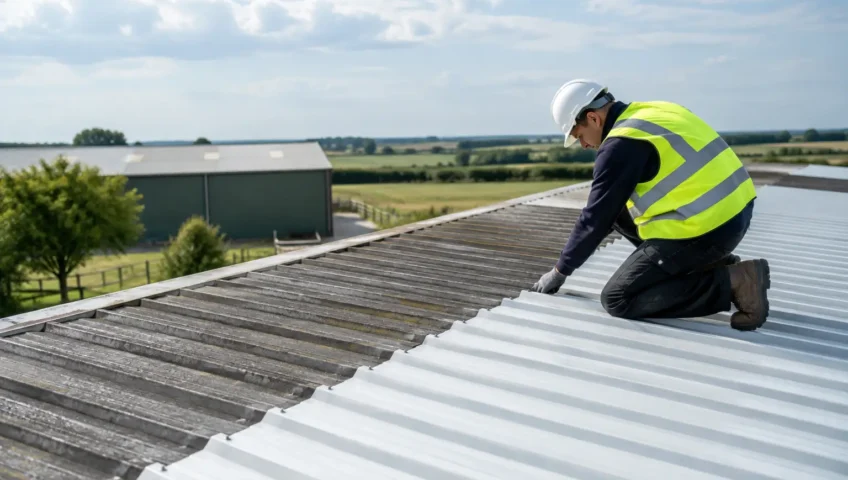
A leaking shed roof can quickly become more than an inconvenience. Water can damage feed, machinery, stored crops, insulation and electrical equipment, while persistent damp creates poor conditions for livestock and staff. This guide to agricultural roof refurbishment explains how to assess an ageing farm roof, choose the right level of work and protect the building without paying for a full replacement where it is not needed.
Start with the condition of the whole roof
Agricultural roofs work hard. They are exposed to high winds, driving rain, frost, UV light, moss growth and, in many cases, internal condensation. A small defect that might go unnoticed on a domestic roof can become a serious issue on a large barn, byre, stable, workshop or storage unit.
A proper inspection should look beyond the obvious leak. The roof covering, fixings, ridge details, flashings, guttering, rooflights and supporting structure all need checked. Water entering at the ridge, for example, may show up many metres away from the actual fault. Likewise, overflowing gutters can soak cladding and masonry, making it appear that the roof itself has failed.
Signs that refurbishment should be considered include recurring leaks, loose or corroded sheets, cracked fibre cement, failing seals around rooflights, rust staining, moss build-up, blocked gutters and visible daylight from inside the building. Sagging purlins, rotten timbers or movement in the frame require particular attention, as these can affect whether a repair or coating is suitable at all.
Repair, coating or replacement: what does your building need?
The best answer depends on the age of the roof, its construction and the extent of deterioration. Full replacement is sometimes unavoidable, particularly where the covering is beyond repair or the structure underneath has weakened. However, replacement is not automatically the most cost-effective option.
Localised repairs for contained defects
If damage is limited, targeted roof repairs can offer excellent value. This may involve replacing broken sheets or tiles, renewing flashings, resealing laps and penetrations, securing loose fixings, replacing damaged ridge sections or repairing guttering. These works are often appropriate where the majority of the roof remains sound and the leaks have a clear source.
Repairs should not be treated as a temporary patch simply because they are smaller in scale. When the right materials are used and the cause of the problem is addressed, targeted work can extend the roof’s useful life significantly.
Roof coatings for weathered but stable coverings
A roof coating can be a practical restoration option for certain agricultural buildings. It is generally most suitable where the existing roof is structurally sound but has become porous, weathered or tired-looking. Once the surface has been properly cleaned, prepared and repaired, a suitable coating can help improve weather resistance and prolong serviceable life.
Coatings are not a cure for every problem. They will not correct rotten timbers, severely corroded sheets, major movement in the roof structure or widespread cracking. Any contractor recommending a coating should first confirm that the roof is a realistic candidate for refurbishment. Preparation matters just as much as the coating itself, as dirt, algae, loose material and failed fixings can prevent a lasting finish.
When replacement is the sensible choice
A complete re-roof may be the better investment where there are widespread leaks, extensive corrosion, fragile roof sheets, repeated repair history or structural concerns. It can also make sense when a building needs improved insulation, more daylight panels, better ventilation or a new layout for modern farm use.
Although replacement costs more upfront, it may reduce ongoing maintenance and disruption over the longer term. The key is comparing like for like: the cost of the proposed refurbishment, its expected lifespan, the condition of the structure and the likely expense of further repairs if work is delayed.
A practical guide to agricultural roof refurbishment
Refurbishment should be planned around the building’s use, not simply around the visible roof damage. A machinery store may need work scheduled around harvest or lambing. A livestock building needs safe access arrangements, while a grain store may need protection from dust, moisture and debris throughout the job.
The first stage is a detailed survey. This establishes the roof type, the condition of the supporting structure, the source of any leaks and whether there are hazardous materials to consider. Older agricultural buildings may have roof sheets that require specialist assessment and handling. Do not allow anyone to pressure-wash, cut into or remove suspect materials without the correct checks and controls in place.
Once the survey is complete, the scope of work should be set out clearly in writing. A good quote explains what is being repaired or replaced, how the roof will be prepared, whether guttering and flashings are included, and what guarantee applies to the work. This makes it easier to compare options and avoids surprises once the job has started.
Access and safety are equally important. Farm buildings are often large, high and awkward to reach, with fragile roof areas that must not be walked on. Proper access equipment, safe working methods and organised site management protect everyone on site and help prevent damage to the building, livestock or equipment below.
Do not overlook gutters, rooflights and ventilation
The roof covering receives most attention, but the surrounding details often decide whether a refurbishment lasts. Blocked or undersized gutters can cause water to back up beneath roof edges, rot timber sections and wash out ground around the building. Downpipes should discharge water safely away from entrances, walls and working areas.
Rooflights also need close inspection. They can become brittle with age, lose their seals or crack around fixings. Replacing failed rooflights during planned refurbishment can improve natural light and reduce the need for artificial lighting, but they must be installed correctly to prevent future leaks.
Ventilation is another consideration, especially in livestock buildings. Condensation can be mistaken for a roof leak, yet the solution may involve improving airflow rather than adding more sealant. A contractor should assess how moisture is forming inside the building before recommending work. Better ventilation may protect the roof structure, improve internal conditions and reduce corrosion over time.
Timing refurbishment around the farm calendar
There is rarely a perfect time for roofing work on an active farm, but planning makes a major difference. Dry periods are preferable for external work, although Scottish weather means experienced contractors need to manage changing conditions carefully. The priority is to avoid leaving vulnerable sections exposed and to protect anything stored beneath the roof.
Think about access for vehicles, feed deliveries, livestock movements and seasonal workloads before agreeing a start date. If the building cannot be taken out of use completely, work may need completed in sections. That can take longer than an empty-site project, but it may be the right trade-off for keeping the farm operating.
It is also sensible to deal with small defects before winter. A loose flashing or blocked gutter is cheaper and easier to address before prolonged rain and strong winds turn it into internal water damage.
Choosing a contractor for agricultural roofing work
Agricultural roofing is not simply domestic roofing on a larger scale. The contractor needs to understand large roof areas, rural access, safe working at height, drainage requirements and the practical realities of farm buildings.
Ask for a written assessment rather than accepting a guess from ground level. You should be able to understand the proposed solution, why it is suitable and what is excluded from the price. Check that the contractor can manage repairs, coatings, guttering and roofline details as one coordinated job where needed. This reduces the risk of separate trades blaming each other if a problem remains.
For farm owners across Glasgow, Hamilton, Lanarkshire and surrounding areas, Varey Contracts Ltd provides inspections, repairs and cost-effective roof restoration options backed by clear written quotes. The aim should always be to protect the building properly while avoiding unnecessary replacement costs.
A well-planned refurbishment can give an ageing agricultural roof a new lease of life, but only where the underlying structure supports it. Arrange an inspection when the first warning signs appear, and you will have more options, more control over cost and far less chance of a small leak becoming a major disruption.


