

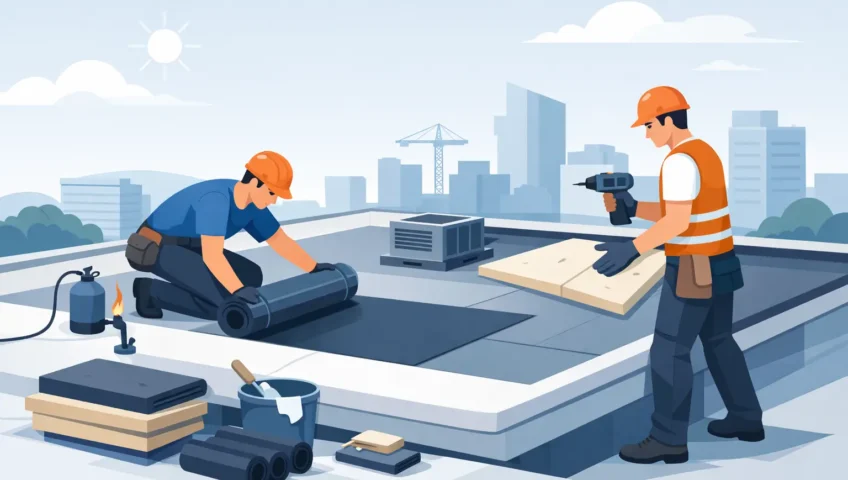
A flat roof rarely fails all at once. More often, it starts with a small leak over the back extension, a damp patch that keeps returning, or blistering and cracks that get worse after every spell of heavy rain. That is usually when people start looking for a guide to flat roof replacement – not because they planned a big roofing project, but because the roof has reached the point where patch repairs are no longer enough.
For homeowners, landlords and property managers, the key question is not just whether the roof can be replaced. It is whether replacement is the right call now, or whether a repair would still give you worthwhile service. Getting that decision right can save a lot of money and prevent repeat problems.
When flat roof replacement is the right option
A good contractor should not push replacement if a repair will do the job properly. In many cases, localised damage around a joint, flashing or edge detail can be repaired at a far lower cost than a full renewal. That makes sense when the rest of the roof covering is still sound and the issue is limited.
Replacement becomes the better option when the roof is showing failure across a wider area. Persistent leaks in different spots, widespread cracking, lifting felt, ponding water that never properly drains, soft areas in the roof deck, or signs of long-term water ingress inside the building all point to a roof that may be beyond economical repair.
Age matters too. If a flat roof has already had several repairs and is nearing the end of its expected lifespan, more patchwork often means spending money without solving the underlying problem. In that situation, replacing the roof can be the more cost-effective choice over the next ten to twenty years.
Guide to flat roof replacement – what gets replaced?
Flat roof replacement does not always mean stripping everything back to the joists, but it often involves more than just laying a new surface on top. The scope depends on the condition of the existing roof.
In some cases, the waterproof covering is removed and replaced while the deck underneath remains usable. In others, the deck has been damaged by moisture and needs renewed as well. Insulation may also need upgraded, particularly on older roofs where heat loss is an issue or where the current build-up no longer meets modern expectations.
The details around the edges matter just as much as the main covering. Flashings, trims, outlets, upstands and junctions with walls or rooflights are common weak points. If those are not dealt with properly during replacement, even a new roof can start causing trouble sooner than it should.
That is why a proper site inspection matters. A written quote should clearly explain what is being removed, what is being renewed, and whether any hidden defects could affect the final scope once the old covering comes off.
Choosing the right material for a replacement flat roof
Not all flat roofing systems are the same, and the best option depends on the building, budget and expected lifespan.
Felt roofing remains a popular choice because it is proven, widely used and often cost-effective. A modern high-performance felt system can give strong weather protection when installed correctly. It suits many domestic garages, extensions and smaller commercial roofs, especially where value for money is a major factor.
EPDM rubber roofing is another common option. It is known for durability, flexibility and resistance to weathering. It can work particularly well on simple roof shapes with fewer penetrations and details. Many property owners like it because it offers a clean finish and can provide a long service life.
GRP fibreglass roofing is often chosen where a smooth, hard-wearing finish is wanted. It can be a good fit for smaller flat roofs, though installation conditions matter. If the weather is poor during fitting, that can affect the process, so timing and workmanship are important.
There is no one-size-fits-all answer. The cheapest material upfront is not always the cheapest over time, and the longest-lasting option is not always necessary for every building. A garage roof, for example, may justify a different choice from a main living space roof over a kitchen extension.
What affects the cost?
One of the first things people want from any guide to flat roof replacement is a clear idea of cost. The honest answer is that price depends on several practical factors.
Roof size is the obvious one, but access also matters. A roof that can be reached easily from a scaffold in an open driveway will generally be simpler than one above a conservatory or in a tight rear garden. The condition of the existing roof is another big factor. If the timber deck is rotten or insulation needs replaced, the job becomes more involved.
Material choice will affect cost, but so will the detailing. Rooflights, pipe penetrations, parapet walls and awkward junctions all take extra time and skill. Waste disposal, edge trims and any required improvements to drainage can also influence the overall quote.
That is why a free written quote is far more useful than a rough figure given over the phone. It lets you compare like for like and see whether one price includes items another has left out.
What to expect during the replacement process
A professional flat roof replacement should feel organised from the start. After inspection, you should receive a clear explanation of the problem, the recommended solution and the price. If replacement is advised, you should know which system is being installed and what guarantee is being offered.
On the day work begins, the old covering is usually stripped back first. Once exposed, the deck is checked for damage. If there are soft or rotten sections, these are replaced before the new roof build-up is installed. This stage is important because there is no benefit in putting a new waterproof layer over a failing base.
After that, the new system is fitted, along with trims, flashings and finishing details. The timescale depends on the roof size and weather, but many domestic flat roof replacements can be completed fairly quickly if there are no major complications.
A good team will also keep disruption to a minimum, leave the site tidy and explain any aftercare points once the work is complete. For occupied homes and busy commercial sites, that practical side of the job matters just as much as the materials used.
Common mistakes to avoid
The biggest mistake is delaying too long when the roof is already failing. Small leaks can lead to damaged ceilings, wet insulation, timber decay and higher repair bills inside the property. What starts as a roofing issue can quickly become a wider maintenance problem.
Another mistake is choosing on price alone. Low quotes can be attractive, especially when the roof problem has come unexpectedly, but flat roofing is all about detail. Poor preparation, rushed installation or cheap materials can mean paying again far sooner than expected.
It is also worth being cautious about being sold a full replacement when a repair or coating solution may still be viable. An honest contractor should talk you through the options and explain the trade-offs. Sometimes replacement is essential. Sometimes it is not.
How to know you are getting sound advice
Look for a contractor who inspects the roof properly, explains the condition in plain language and provides a written quote without pressure. You want a team that can handle repairs as well as replacements, because that usually means the recommendation is based on what the roof needs rather than which job is worth more.
For properties across Glasgow, Hamilton and surrounding areas, weather exposure is a real factor. Flat roofs take a beating from driving rain, standing water and winter conditions, so workmanship has to be right. A family-run contractor with practical local experience will usually understand the issues these roofs face and the value of getting the job done properly first time.
Varey Contracts Ltd works with domestic and commercial customers who need that clear, no-nonsense approach – whether the answer is a targeted repair or a full replacement.
A guide to flat roof replacement starts with the right diagnosis
The most useful advice is often the simplest. Do not assume every leak means you need a new roof, and do not assume another patch repair is always the cheaper option. The right decision comes from knowing the condition of the full roof, the likely lifespan left in it, and the cost of putting the issue right properly.
If your flat roof is showing repeated signs of failure, the best next step is a proper inspection and a free written quote. Once you know what is happening above your head, the path forward becomes much clearer – and your property is far better protected for it.

