

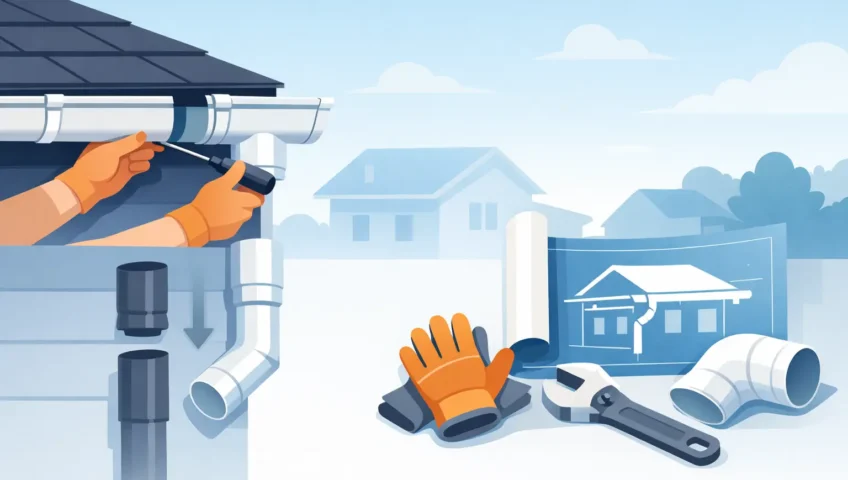
When rainwater starts spilling over the edge of the gutter instead of running cleanly into the drain, the problem rarely stays small for long. Guttering and downpipe replacement is often put off because it looks like a minor external job, but faulty rainwater systems can lead to damp walls, staining, rotting soffits, damaged brickwork and pooling around the base of the property.
For many homeowners and landlords, the real question is not whether something is wrong. It is whether a repair will do the job or whether replacement is the better investment. That depends on the age of the system, the extent of the damage and whether the faults are isolated or spread across several sections.
When guttering and downpipe replacement is the right choice
A single leaking joint or a loose bracket does not always mean the whole system needs to come down. In plenty of cases, a targeted repair is the sensible option. If the gutters are otherwise sound, properly aligned and still have years of life left in them, there is no reason to replace more than necessary.
The picture changes when problems keep returning. If joints are failing in multiple places, the gutters are sagging, the downpipes are cracked, and water is regularly overflowing during normal Scottish rain, replacement usually makes more financial sense than repeated patch repairs. Paying for one fix after another can quickly add up, and it still leaves you with an ageing system that may fail again in the next spell of bad weather.
Another common reason for replacement is poor original installation. We often see guttering that is the wrong size for the roof area, set at the wrong fall, or fixed with too few brackets. In that situation, the issue is not just wear and tear. The whole system may be struggling to do its job from the start.
Signs your guttering is no longer doing its job
Some warning signs are obvious. Water pouring over the front edge during rain is a clear one. So are visible cracks, broken clips, detached downpipes and joints that drip long after the rain has stopped.
Other signs are easier to miss. Damp patches on external walls, green staining, peeling paint around the roofline, or mossy build-up near the foot of the wall can all point to escaping rainwater. On some properties, the first clue is water collecting around entrances, patios or driveways because the downpipe is no longer directing water where it should go.
If you own a rental property or manage a commercial building, it is worth acting before internal damage starts. Once water begins affecting wall surfaces, insulation or timber elements, the repair bill is no longer limited to the guttering.
Common problem areas
The weakest spots are usually the joints, corners, outlets and brackets. These areas take the most strain, especially in heavy rain and high winds. Downpipes also tend to suffer at bends and lower sections where impact damage or blockages are more likely.
On older properties, corrosion can be a factor if metal guttering has been in place for many years. On newer systems, brittle plastic and poor-quality fittings are often the culprit.
Repair or replacement – what gives better value?
There is no one-size-fits-all answer. A straightforward repair is usually better value when the fault is localised and the rest of the installation is in decent condition. That might mean resealing a leaking joint, replacing a bracket, clearing a blockage or renewing one cracked section.
Full replacement tends to offer better value when the system is near the end of its working life, when the same problems keep coming back, or when the guttering is undersized for the property. It also makes sense if you are already replacing soffits, fascias or other roofline elements, because doing the work together is often more efficient and more cost-effective.
For older homes in places like Glasgow and Hamilton, where wind-driven rain is a regular issue, reliable water management matters. A properly fitted replacement system can prevent years of avoidable external damage and ongoing maintenance costs.
Choosing the right material for guttering and downpipe replacement
Most domestic properties use uPVC because it is affordable, low maintenance and available in several styles and colours. For many homeowners, it gives the best balance of price and performance.
Aluminium is another strong option, especially for customers looking for a cleaner finish and a longer service life. It is lighter than many expect, resistant to rust and often well suited to larger homes and commercial properties. The upfront cost is higher, but durability can make it worthwhile.
Cast iron effect systems are popular on period properties where appearance matters. These can deliver the traditional look without the same maintenance demands as genuine cast iron. Real cast iron is still used in some cases, but it is heavier, more expensive and generally chosen for heritage or specialist buildings.
The right material depends on the building, your budget and how important appearance is to you. It also depends on exposure. A property in an open rural setting may need a more hard-wearing solution than a sheltered semi-detached home on a quiet street.
What affects the cost?
The cost of replacement is shaped by more than the length of guttering alone. Access matters. A simple bungalow is very different from a taller building with awkward elevations or extensions. The number of corners, outlets and downpipes also affects labour and materials.
Condition matters too. If old fittings are badly worn, if fascias need attention, or if previous leaks have damaged the roofline, extra work may be needed before the new system can be fitted properly. That is why a written quote after inspection is always the sensible way to price the job.
Cheapest is not always best here. Poorly installed guttering can fail quickly, even when the materials are new. Correct fall, secure fixing, proper jointing and suitable outlet placement all make a real difference to performance.
Why installation quality matters more than people think
Gutters do a simple job, but they need to be set up accurately. If the fall is too flat, water sits in the channel and causes overflow or joint failure. If the fall is too steep, the gutter can look uneven and may not catch water properly at roof edges. If bracket spacing is wrong, sections can sag under the weight of rainwater and debris.
Downpipes also need careful positioning. A system that discharges too slowly or into the wrong point can create standing water below, which leads to a different set of property problems.
This is why inspection is so important before work starts. A contractor should not just measure and replace like for like. They should check whether the current system was suitable in the first place and whether changes are needed to improve drainage.
Replacement as part of wider roofline work
Sometimes guttering problems are tied to issues with soffits, fascias or roof edges. If timber roofline boards are rotting, simply fitting new gutters onto weakened supports is not a long-term fix. The same goes for properties where roof coverings have slipped and water is running behind the gutter.
In those cases, it makes sense to deal with the whole affected area rather than treating the guttering in isolation. A joined-up approach usually protects the property better and avoids repeat call-outs.
That is one reason customers often prefer a contractor who handles wider roofing and external works, not just gutters on their own. It allows the source of the problem to be identified properly instead of guessing at the symptom.
How to know when to act
If water is visibly escaping, do not wait for the next winter storm to see if it gets worse. Guttering faults tend to become more expensive once surrounding areas are affected. The sooner the issue is assessed, the more likely it is that damage can be kept to a minimum.
For homeowners, a quick inspection can bring peace of mind. For landlords and property managers, it helps avoid complaints, damp issues and larger maintenance costs later on. If your existing system is ageing, leaking in several places or simply not coping with normal rainfall, replacement may be the practical option rather than another temporary repair.
A good rainwater system should be something you never have to think about. If yours is making itself noticed every time it rains, it is probably time to get it checked properly and decide whether repair or replacement will protect the property best.


