

A roof covered in moss might not look like an emergency, but it can turn into one faster than most property owners expect. Blocked gutters, trapped moisture and cracked tiles often start with a roof that simply has not been cleaned properly. If you are wondering how to clean roof tiles safely, the first thing to know is that safety matters more than getting the job done quickly.
Roof cleaning is not just about appearance. On tiled roofs, heavy moss and debris can hold water against the surface, add unnecessary weight and interfere with drainage. In Scotland, where wet weather and shaded roof slopes are common, that build-up can become a real problem if it is left too long.
Why roof tile cleaning needs care
Roof tiles are built to withstand the weather, but they are not designed to be walked on carelessly or blasted at close range with the wrong equipment. Concrete tiles, clay tiles and older roof coverings all respond differently to cleaning methods. What works on one roof can loosen tiles, strip protective finishes or force water underneath the covering on another.
That is why a gentle, considered approach is always best. Safe cleaning protects the tiles themselves, the underfelt beneath them, the guttering around them and, just as importantly, the person carrying out the work.
How to clean roof tiles safely without causing damage
The safest method usually starts with an inspection from ground level. Before anyone goes near the roof, it is worth checking for slipped tiles, damaged ridges, cracked verge pointing, sagging guttering and areas of heavy moss growth. If the roof is already in poor condition, cleaning it without repairs can make things worse.
For light debris such as leaves and small twigs, careful manual removal is often enough. Moss is different. Thick moss should be scraped off gently using tools suited to roof cleaning rather than anything sharp or aggressive. The aim is to lift the growth away without gouging the tile surface or dislodging the leading edge of the tiles.
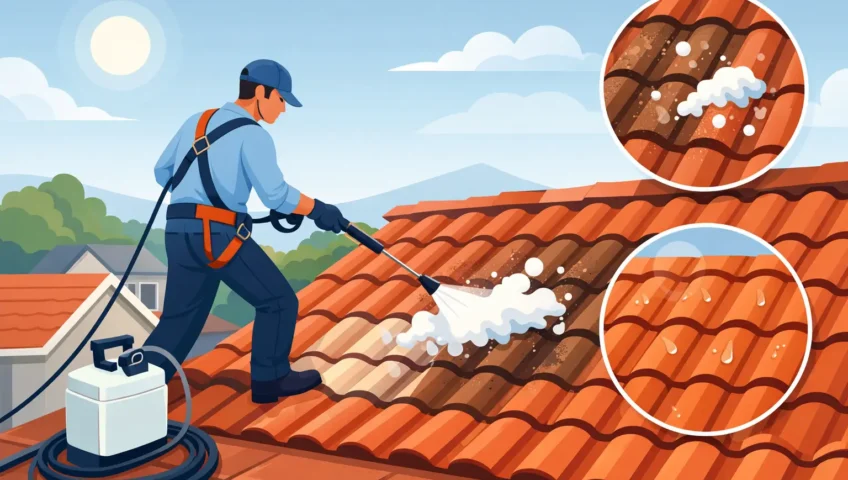
After that, a low-pressure rinse or specialist soft wash treatment is usually the safer option. Soft washing is widely preferred because it removes residue and treats organic regrowth without the force that can damage a tiled roof. High-pressure washing can seem like the quickest fix, but on many roofs it creates more problems than it solves.
When pressure washing is the wrong choice
This is where many roofs end up damaged. A domestic pressure washer might be fine for a patio, but roof tiles are a different matter. Used incorrectly, high pressure can erode tile surfaces, lift protective coatings, drive water beneath the tiles and shorten the life of the roof.
It can also make minor faults more serious. A tile that was only slightly loose before cleaning may come away completely. Mortar at the ridge or verge can be disturbed. Flashings around chimneys and abutments can be affected as well.
That does not mean every form of pressure cleaning is automatically unsuitable. In some cases, trained professionals may use controlled equipment on sound roofs with the right technique and stand-off distance. But for most homeowners, it is not the safest approach to attempt themselves.
The main safety risks people underestimate
Falls are the biggest risk, and they are not limited to steep roofs. Even a lower extension roof can be dangerous when it is wet, mossy or brittle. Roof tiles become slippery very quickly, especially after rain or early morning dew.
Ladders are another issue. An unsecured ladder, poor footing or trying to overreach from the side can lead to serious injury. Then there is the hidden risk of causing damage while trying to avoid a slip. One wrong step can crack multiple tiles and create a leak that was not there before.
There is also the question of what is growing on the roof. Moss, algae and lichen are not just untidy. Once disturbed, they can drop into gutters and downpipes, leading to blockages if they are not cleared properly afterwards.
A safer way to approach roof cleaning
If you are set on handling minor roof cleaning yourself, keep the job limited to what can be done safely from secure access equipment and without walking unnecessarily across the tiles. In practice, that often means clearing accessible debris, checking gutters and arranging professional help for the main roof slopes.
Use appropriate footwear with good grip, avoid working in wet or windy weather and never rush the job. Roof cleaning should also be planned with the surrounding property in mind. Falling moss and dirty runoff can affect conservatories, driveways, vehicles and neighbouring areas, so protection below matters too.
For larger areas of growth, older roofs or anything with signs of damage, professional cleaning is usually the more cost-effective choice. That may sound counterintuitive, but it is often cheaper than paying for avoidable repairs later.
Knowing when to stop and call a roofer
Some roofs should not be cleaned as a DIY job at all. If tiles are already cracked, the roof is particularly steep, access is awkward or there are signs of leaks inside the loft, the sensible step is to get it inspected first. The same applies if moss has become thick enough to lift tile edges or spill heavily into the gutters.
A professional roofer will not just clean the surface. They should assess the condition of the roof, identify weak points and recommend the right method for that specific covering. In many cases, a roof also benefits from follow-up treatment to slow down moss regrowth and keep it cleaner for longer.
This is especially useful on properties surrounded by trees or facing persistent damp conditions, which is common across many parts of Glasgow and Lanarkshire. Shaded roofs often need a more tailored maintenance plan rather than a one-off clean.
What a proper roof cleaning service should include
A good roof cleaning service is about more than making the tiles look better from the street. It should begin with an honest assessment of whether the roof is suitable for cleaning in its current condition. If repairs are needed first, that should be made clear.
The work itself should be carried out using a method suited to the roof type and age. Moss should be removed carefully, waste should be cleared properly and gutters should be checked afterwards. If coating or treatment is recommended, it should be for a practical reason, not simply as an upsell.
For homeowners trying to avoid the cost of a full reroof, this matters. Cleaning and restoring a roof at the right time can help extend its serviceable life, but only if it is done correctly. That is a big part of why many customers choose an experienced roofing contractor rather than a general exterior cleaning company.
How often should roof tiles be cleaned?
There is no one answer because it depends on the age of the roof, the material, nearby trees and how exposed the property is to damp weather. Some roofs may only need attention every few years, while others develop heavy moss much sooner.
The better habit is to have the roof visually checked from time to time, particularly after winter. If moss is thickening, gutters are overflowing with debris or there are dark damp patches that linger, it is worth dealing with it before the problem spreads. Leaving it until the roof looks obviously neglected usually means more work and a higher bill.
Protecting the roof after cleaning
Once the tiles are clean, prevention becomes the next job. Regular gutter clearance helps keep water moving away properly. Trimming back overhanging branches can reduce shade and debris. If the roof is suitable, a professional biocide treatment may help slow the return of moss and algae.
This is also the ideal time to deal with minor repairs. Replacing a cracked tile, securing a loose ridge or sorting a small gutter issue after cleaning is far easier than waiting until bad weather exposes the weakness.
For property owners who want the roof cleaned without risking damage, Varey Contracts Ltd takes a practical approach. The priority is always the same – protect the roof, avoid unnecessary costs and carry out the work properly from the start.
A clean roof should never come at the expense of the roof itself. If there is one rule worth keeping in mind, it is this: the safest roof cleaning job is the one that improves the condition of the roof rather than testing it.


