

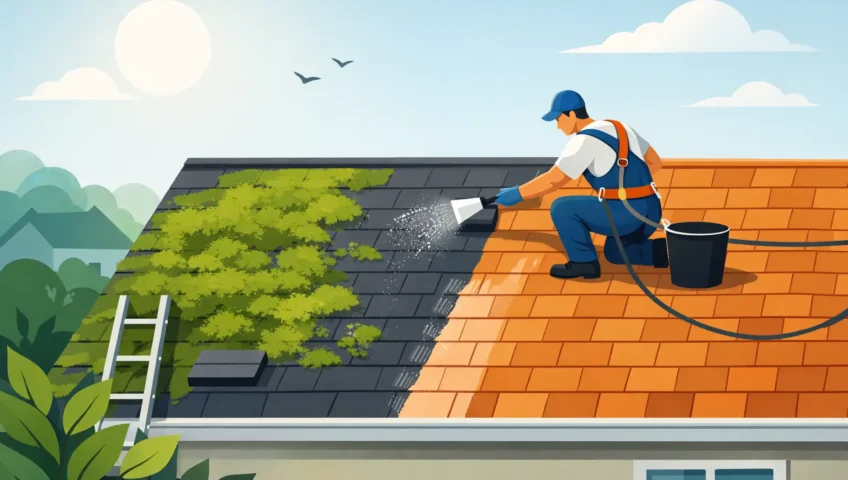
A roof covered in moss might not look urgent from ground level, but it rarely stays a cosmetic issue for long. If you are wondering how to remove moss from roof surfaces properly, the first thing to know is this: the wrong method can do as much damage as the moss itself. Broken tile edges, loosened ridge bedding and blocked gutters are common after rushed DIY cleaning.
In Scotland, where damp weather gives moss exactly what it wants, build-up tends to come back quickly if it is not dealt with properly. That is why the best approach is not just scraping it off and hoping for the best. You need to remove it safely, protect the roof covering underneath and reduce the chance of regrowth.
Why moss on a roof should not be ignored
Moss holds moisture against the roof surface. On slate and tiled roofs, that constant dampness can shorten the life of the covering and make the roof more vulnerable during colder spells. When moss gets thick, it can also lift tile edges slightly, which creates places for wind-driven rain to get in.
Another problem is where the moss ends up next. As it breaks away, it often washes into gutters and downpipes, causing blockages and overflow. What starts as a roof cleaning issue can quickly turn into damp patches on walls, overflowing guttering and unnecessary repair costs.
For landlords and property managers, moss can also hide defects that need attention. A roof inspection is much easier once the surface is clear, and that can help spot slipped tiles, cracked slates or worn flashing before they become a leak.
How to remove moss from roof surfaces without causing damage
There is no single method that suits every roof. The right approach depends on the age of the roof, the type of covering, the pitch and how heavy the build-up is.
For many properties, manual moss removal is the safest starting point. That usually involves working from proper roof access equipment, gently lifting the moss away with suitable tools and collecting the debris instead of letting it fall into the guttering below. This is slower than aggressive cleaning methods, but it gives much better control and reduces the risk of damaging the surface.
After the main growth has been removed, the roof is usually treated to deal with spores and slow regrowth. That matters because a roof can look clean while still holding enough moss residue for the problem to return quite quickly.
What should be avoided is just as important. Heavy pressure washing can strip protective finishes from tiles, force water under the covering and dislodge weak pointing or ridge materials. On some newer, stronger roofs it may be used carefully by experienced contractors, but on many domestic roofs it is too harsh. Older tiled roofs and slate roofs in particular often need a much more controlled method.
The main roof moss removal methods
Manual removal
This is often the best option for delicate or ageing roofs. Moss is scraped or brushed off carefully, section by section, without excessive force. It is practical, controlled and far less likely to damage tiles than blasting the surface.
The trade-off is time. Manual cleaning takes longer, especially on larger roofs or where moss is deeply rooted. But if the goal is to protect the roof rather than just make it look better for a few weeks, it is usually worth it.
Soft wash treatment
A soft wash treatment is commonly used after manual clearing. This helps kill off remaining spores, algae and lichen so the roof stays cleaner for longer. It is not instant in every case, but it supports a more lasting result.
This method is often the sensible middle ground for homeowners who want the roof cleaned without the risks that come with aggressive washing.
Pressure washing
This can remove moss quickly, but it is not automatically the right choice. Used badly, it can crack tiles, strip coatings and drive water into places it should never reach. Even when it is used by professionals, it needs careful judgement.
If someone offers a very cheap roof clean and the plan is simply to pressure wash everything from the ridge down, that should raise concerns. Fast is not always cost-effective when repairs follow.
Safety comes first
Anyone searching how to remove moss from roof areas often starts with the practical side, but safety needs to come before technique. Roof work is hazardous. Slippery moss, wet tiles, steep pitches and fragile edges all increase the risk of a serious fall.
Ladders on their own are not enough for proper roof cleaning. Safe access, edge protection and experienced handling matter, especially on two-storey homes, commercial buildings and agricultural roofs. There is also the issue of debris falling onto conservatories, parked vehicles or paths below.
For that reason, many homeowners are better off arranging a professional roof cleaning service rather than trying to do it themselves. A proper contractor should assess the roof condition first, use the right access equipment and explain clearly what method is suitable.
When DIY moss removal makes sense – and when it does not
There are limited situations where light DIY work may be reasonable, such as a small single-storey outbuilding with safe access and minor moss growth. Even then, the job should be gentle, controlled and never rushed.
For most homes, especially if the roof is older, steep or already showing signs of wear, DIY becomes much harder to justify. If tiles are loose, gutters are overflowing, or there is visible sagging or cracking, the roof needs inspection before any cleaning starts. Cleaning a damaged roof without checking it first can make the problem worse.
It also depends on what outcome you want. If you simply want to remove visible moss from one patch, that is one thing. If you want the roof protected properly and the issue kept under control, professional treatment is usually the more reliable route.
What happens after the moss is removed
Once the roof is clean, the next step is making sure the rest of the system is in order. Gutters should be cleared fully, because loose moss and grit often collect there during the cleaning process. Downpipes should also be checked to make sure water can drain freely.
This is also a good time to inspect the roof covering closely. You may find cracked tiles, slipped slates, worn mortar on ridges or signs of previous patch repairs that need attention. A clean roof makes these defects easier to spot and cheaper to address before they turn into active leaks.
Some properties also benefit from roof coatings or other restoration work, depending on condition. That is not right for every roof, but where the surface is ageing rather than failing, it can be a cost-effective alternative to full replacement.
How often should moss be removed from a roof?
That depends on the setting of the property. Roofs near trees, in shaded spots or in damp areas usually see regrowth faster than roofs with good sun exposure and airflow. In many cases, periodic inspection is more useful than sticking to a rigid timetable.
If you can see green build-up from the ground, notice gutter blockages after rain or spot moss collecting at the roof edge, it is worth arranging an assessment. Acting early is usually cheaper than waiting until the roof and gutters are heavily affected.
For homeowners across Glasgow, Hamilton and surrounding areas, damp conditions often mean moss is not a one-off issue. Regular maintenance tends to cost less than reactive repairs caused by trapped moisture and blocked drainage.
Choosing the right contractor
If you are hiring someone to carry out roof moss removal, ask how they plan to do it. A reliable contractor should be able to explain the process in plain terms, tell you whether the roof is suitable for that method and point out any repairs needed before or after cleaning.
Look for a company that treats roof cleaning as part of overall roof care, not just a quick wash. The best result is not simply a cleaner-looking roof. It is a roof that drains properly, stays protected and does not suffer avoidable damage during the work.
A family-run contractor such as Varey Contracts Ltd will usually understand that customers are not just paying for moss to be removed. They want reassurance, honest pricing and a job done properly the first time.
Moss removal is one of those jobs that looks simple until the roof starts shedding tiles, the gutters choke up and water finds a way in. Done carefully, it protects the life of the roof and helps avoid larger costs later. If you are unsure about the safest method for your property, getting a proper inspection is often the smartest next step.


