

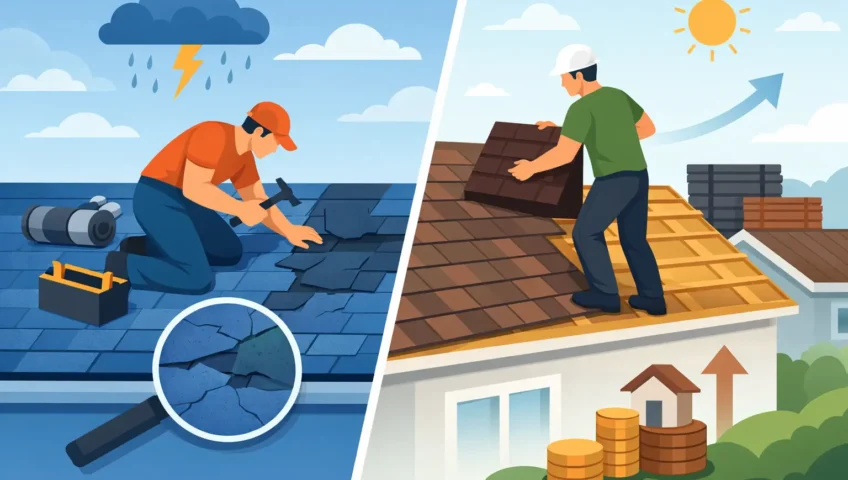
A roof problem rarely arrives at a convenient time. One missing tile, a damp patch on the ceiling or water getting in around the chimney is usually when people start asking the same question – is this a roof repair or re roof job?
The honest answer is that it depends on the age of the roof, how widespread the damage is and whether the issue has been caught early. In many cases, a well-carried-out repair can add years to the life of a roof and save a property owner a significant amount of money. In other cases, spending money on repeated patch repairs only delays the inevitable and ends up costing more.
For homeowners, landlords and property managers, the right decision comes down to condition, value and timing. You need a clear assessment, not guesswork.
Roof repair or re roof – what is the difference?
A roof repair deals with a specific fault or a limited section of the roof. That could mean replacing cracked slates, fixing storm damage, renewing lead flashing, repairing ridge tiles, dealing with flat roof splits or sorting out leaks around roofline details. The structure of the roof stays in place, and the work focuses on the damaged areas.
A re roof is more substantial. It usually means stripping off the existing roof covering and installing a new one. Depending on the condition of the roof, that can also involve replacing battens, underfelt, ventilation components and sometimes sections of the timber structure underneath.
The key difference is scale. Repair work is targeted. A re roof is a broader renewal of the roofing system.
When a roof repair makes more sense
If the roof is generally sound and the problem is localised, repair is often the smarter option. This is especially true where damage has been caused by recent bad weather, slipped tiles, isolated flat roof wear or a failure in flashing around a chimney or dormer.
A good repair can be very cost-effective when the rest of the roof still has life left in it. For example, if a slate roof is in fair condition overall but a section has loosened after high winds, replacing the affected slates and securing the surrounding area is usually far more sensible than starting again.
The same applies to many tiled roofs and some flat roofs. Small splits, lifted edges or weak joints do not always mean full replacement. If the membrane or covering is still serviceable across most of the area, repairing the defect may be enough to stop water ingress and restore protection.
Roof repairs also make sense when speed matters. If water is getting into the property, a prompt repair can prevent damage spreading into ceilings, insulation, walls and electrics. Acting quickly often keeps the job smaller and cheaper.
When a re roof is the better investment
There comes a point where repairs stop being good value. If faults are appearing in several areas, materials are badly worn, or the roof has reached the end of its service life, a re roof is often the more sensible long-term decision.
A roof that has had repeated leaks, multiple patch jobs and visible deterioration across large sections usually needs more than another repair. You might be dealing with perished underlay, failing fixings, rotten battens or widespread movement that cannot be solved by replacing a handful of slates or tiles.
This is common on older properties where the roof covering may still look passable from ground level, but the underlying condition tells a different story. Once the roof is stripped back, hidden issues often become clearer.
A re roof can also be the right choice if you are trying to avoid ongoing call-outs and disruption. For landlords, commercial sites and agricultural buildings in particular, constant reactive repairs can become more expensive than planned renewal. There is also the benefit of a fresh guarantee and the peace of mind that the whole roof has been properly addressed.
The signs your roof may be past repair
Some roofs clearly sit in the repair category. Others are much closer to replacement. The warning signs to look out for are recurring leaks in different places, sagging roof lines, widespread slipped or broken slates, heavy moss build-up that has been left for years, decayed mortar on ridges and verges, and signs of damp in the loft.
You should also pay attention if repair work has been carried out several times over a short period. A single repair is normal. A pattern of defects suggests the roof is wearing out more generally.
Flat roofs deserve particular care here. Ponding water, blistering, open seams and soft areas underfoot can all point to broader failure rather than one isolated problem. In those cases, patching may only buy limited time.
Cost matters – but so does value
Most customers start with cost, and that is understandable. Repairing a roof is usually cheaper upfront than a full re roof. But the lowest initial price is not always the best value.
If a repair solves the issue properly and extends the life of the roof by several years, it is money well spent. If the roof needs repeated attention every winter, that lower upfront cost soon disappears.
A re roof is a bigger investment, but it can reduce future maintenance, improve weather resistance and protect the wider property from water damage. It may also improve appearance, which matters if you are maintaining kerb appeal or managing a property portfolio.
This is why a proper inspection matters. You need to know whether you are paying for a lasting fix or simply delaying a larger job.
Roof repair or re roof for older Scottish properties
In places like Glasgow, Hamilton and across Lanarkshire, roofing decisions are shaped by weather as much as by age. Wind-driven rain, cold winters and repeated storms put pressure on roofs year after year. Older slate roofs can often be repaired successfully, but only if the surrounding materials are still holding up.
Traditional properties often need a contractor who understands how older roofing systems behave. Replacing modern materials onto an ageing roof without considering ventilation, fixings and surrounding details can create new problems. Equally, trying to preserve a roof that is too far gone can waste money.
This is where practical judgement matters. The right answer is not always the most expensive one. It is the one that protects the building properly.
Why inspections should look beyond the obvious leak
The visible leak is often only part of the story. Water can travel before it appears indoors, and the source is not always directly above the stain on the ceiling. That is why roofing work should start with a thorough inspection rather than assumptions.
A proper assessment should consider the roof covering, ridge and verge details, flashings, valleys, guttering, soffits, fascias and any signs of structural movement or trapped moisture. On some jobs, the roof itself is not the only issue. Blocked gutters, failing roofline components or heavy moss growth can all contribute to leaks and premature wear.
For that reason, the best advice is usually based on the whole roof, not just the spot where water has shown up.
How to choose the right contractor for the job
Whether you need a small repair or a full re roof, the standard of workmanship matters. Poor repairs can fail quickly, and poor re roofing work can create expensive problems that should never have happened in the first place.
Look for a contractor who explains the condition clearly, gives a written quote and tells you honestly whether repair is still worthwhile. If every issue is pushed straight towards full replacement without evidence, that is not helpful. The same goes for someone promising a cheap patch when the roof is clearly near the end of its life.
A reliable roofing company should be able to carry out repairs, restoration work and full replacements, because that gives you a genuine recommendation based on need rather than on what they happen to sell. As a family-run contractor, Varey Contracts Ltd works this way – practical advice first, then the roofing option that makes the most financial sense for the customer.
Making the right call at the right time
If your roof has one obvious defect and the rest is in decent order, repair is often the best route. If the problems are widespread, recurring or linked to general age and wear, a re roof is usually the better investment. There is no benefit in overspending on replacement too early, and no benefit in throwing good money after bad when the roof has had its day.
The most useful step is to get the roof checked before minor issues turn into major internal damage. A clear inspection and a free written quote can give you the confidence to act quickly, protect the property and avoid unnecessary expense. When the advice is honest, the decision becomes much simpler.


