

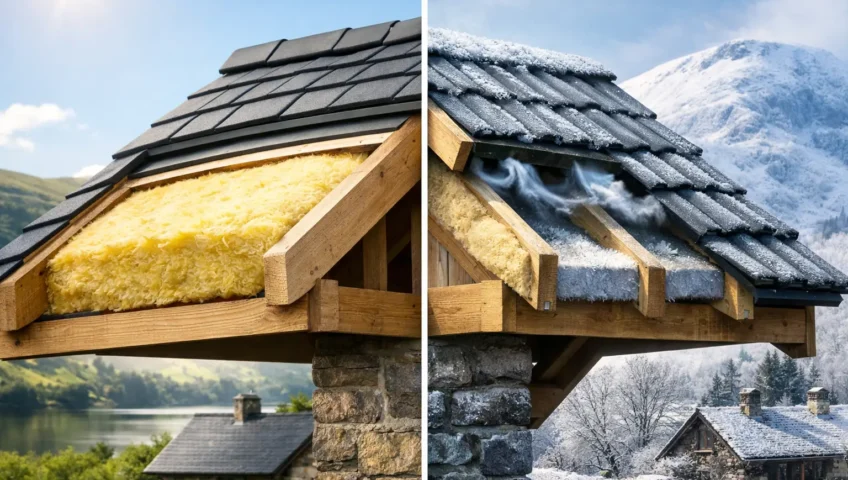
A flat roof that looks sound from the outside can still lose heat, trap moisture or suffer repeated leaks because the layers beneath the covering are in the wrong order. When comparing warm versus cold roofs, the real question is not which option is universally best. It is which construction suits your building, the condition of the existing roof and the work you need carried out.
For homes and commercial properties across Glasgow and Lanarkshire, insulation and condensation are not minor details. Long wet winters, wind-driven rain and regular temperature changes make proper roof design essential. A well-specified roof should keep water out, retain heat and allow the structure to manage moisture safely for years to come.
What Is the Difference Between Warm and Cold Roofs?
The terms usually apply to flat roofing, although the same principles are relevant when insulating pitched roofs. The difference is where the insulation sits in relation to the roof structure.
A warm roof has insulation installed above the structural deck. The waterproof covering, such as a high-performance felt, EPDM rubber or GRP fibreglass system, sits above the insulation. This keeps the roof deck and supporting structure on the warm side of the insulation.
A cold roof places insulation below the roof deck, normally between and beneath the ceiling joists. A ventilated air gap is left between the insulation and deck so cold, potentially damp air can circulate and moisture does not build up against the timbers.
Both can be built correctly. The important point is that a warm roof relies on continuous insulation and careful detailing, while a cold roof relies heavily on effective ventilation and a properly fitted vapour control layer.
Why Warm Roofs Are Often Chosen for Flat Roof Replacements
For a full flat roof renewal, a warm roof is often the more straightforward long-term option. Because the insulation is continuous above the deck, there are fewer cold bridges through the joists. This can improve thermal performance and reduce the chance of warm household air reaching a cold surface and turning into condensation.
That matters in rooms below flat roofs, particularly extensions, kitchens, garages converted into living space and upper-floor rooms. If the ceiling feels cold in winter or the room is difficult to heat, improving the roof build-up can make a noticeable difference to comfort as well as energy use.
A warm roof also protects the deck from the worst temperature swings. In Scottish weather, a roof surface can move quickly from cold rain to sunshine and back again. Keeping the structure warmer and more stable helps create a more resilient system when the roof is installed correctly.
There is a practical advantage during refurbishment too. The internal ceiling can often remain largely undisturbed, as much of the work happens from above. This is useful where a homeowner wants to improve an ageing garage, extension or porch roof without major disruption inside.
The trade-off with a warm roof
A warm roof adds height above the existing deck. On a simple roof this may not be a problem, but on a property with low door thresholds, windows close to roof level, parapet walls or awkward flashing details, the extra build-up needs planning carefully.
The roof must still drain properly. Falls may need to be formed with tapered insulation or adjustments to the deck, and all edges, outlets and abutments must be detailed to suit the new level. Choosing the cheapest covering without addressing these details can lead to ponding water, failed flashings and leaks later on.
The upfront cost can also be higher than adding insulation below a ceiling. However, a full replacement is an opportunity to deal with insulation, waterproofing and drainage as one job rather than patching separate problems over time.
When a Cold Roof Can Be the Right Choice
A cold roof can be suitable where access from above is limited, where the existing roof covering is still in good order, or where the aim is to improve insulation from inside a property. It may also be considered for some outbuildings, garages or smaller structures where the space below is not regularly heated.
Its main benefit is that it can sometimes be less invasive and less costly at the outset. Insulation can be fitted at ceiling level, keeping the roof deck cold but separating the heated room from the unheated roof void.
The difficulty is that cold roofs leave more room for errors. The ventilation gap must remain clear from one side of the roof to the other, and the vapour control layer needs to be continuous. If loft insulation is pushed tightly against the deck, vents are blocked, or warm moist air escapes through gaps around lights and services, condensation can form on the underside of the roof deck.
Over time, that moisture can cause staining, mould, damp insulation and timber decay. These issues can be hidden for a long period before they become obvious as a leak or sagging ceiling.
A cold roof should never be treated as simply “putting insulation in the ceiling”. It needs a considered design that accounts for airflow, moisture movement and the use of the room below.
Warm Versus Cold Roofs: Which Is Better for Your Property?
For most heated flat-roofed extensions and full reroofing projects, a warm roof is generally the preferred modern approach. It offers stronger thermal continuity and reduces the reliance on ventilating a narrow roof void successfully. It is particularly worth considering if the current roof is leaking, the deck is deteriorating or the insulation is poor.
A cold roof may still make sense if the roof covering has plenty of life left and the issue is heat loss through the ceiling, or if the building is an unheated garage or storage space. The decision depends on the condition of the roof, available heights, drainage arrangement, budget and whether the room below is heated and occupied.
For pitched roofs, the same choice appears in a different form. Insulation at ceiling level creates a cold loft, while insulation between or over rafters can create a warm roof space. A cold loft can work well when it is ventilated correctly and is only used for storage. A warm pitched roof is more relevant where the loft has been converted or the roof space forms part of the heated home.
Condensation Is Often the Deciding Factor
A visible roof leak is easy to understand. Condensation is more deceptive because it may occur underneath the roof covering, especially during cold weather, and can be mistaken for a failed roof.
Everyday activities such as cooking, showering and drying clothes add moisture to indoor air. Warm air rises, and if it finds gaps in the ceiling or vapour barrier, it can enter a cold roof void. When that air hits a cold deck, water vapour turns to droplets.
A correctly built warm roof limits this risk by keeping the deck warmer. A correctly built cold roof manages it with ventilation and vapour control. Neither approach excuses poor workmanship. Gaps around rooflights, poorly sealed service penetrations, inadequate falls and damaged flashings can undermine an otherwise good specification.
If you have recurring damp marks beneath a flat roof, a professional inspection should establish whether the cause is water ingress, condensation or both. Treating only the visible stain will not protect the structure.
What to Check Before Approving Roof Work
Before agreeing to a roof repair or replacement, ask how the insulation will be installed and where the vapour control layer will sit. You should also know what covering is proposed, how the roof will drain, and whether existing timbers or decking will be inspected for moisture damage.
For a replacement roof, the quote should reflect the complete build-up rather than only the surface finish. A new felt or rubber membrane over wet, damaged decking will not solve the underlying problem. Equally, insulation work that blocks required ventilation can create a condensation issue where none existed before.
It is sensible to discuss the intended use of the space beneath the roof. A roof over a heated bedroom needs a different level of thermal consideration from one over an unheated shed. If planning rules or building standards apply to the work, the design should be assessed accordingly rather than guessed at on site.
Get the Roof Build-Up Right First Time
The cheapest route is not always the lowest-cost outcome. Repeated patch repairs, heat loss and hidden moisture damage can make an unsuitable roof construction expensive in the long run. A clear assessment of the deck, insulation, falls and waterproofing gives you a proper basis for choosing between repair, a cold roof upgrade or a full warm roof replacement.
Varey Contracts Ltd can assess flat and pitched roofing issues across Glasgow, Hamilton and the surrounding area, explain the practical options in plain language and provide a free written quote. If your roof is cold, damp, leaking or nearing the end of its life, getting the construction right now can protect the property for many winters ahead.
