

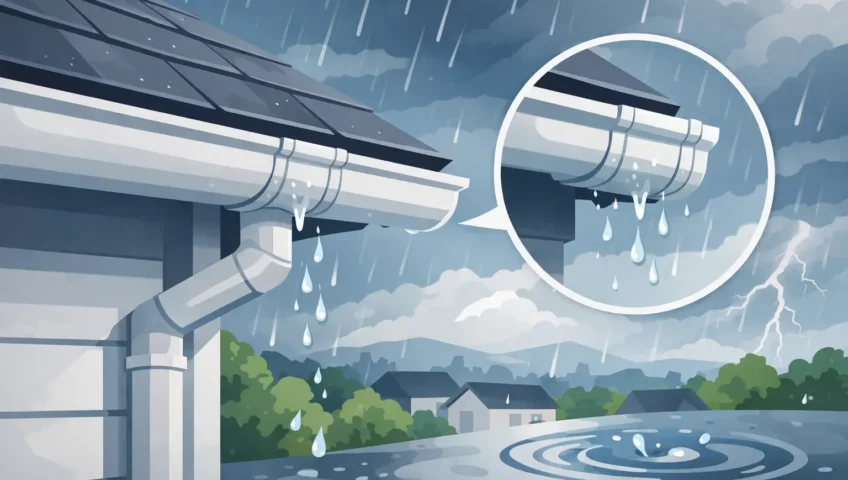
A gutter rarely starts leaking all at once. More often, it begins with a small drip at a joint, a damp patch on the wall, or water spilling over in one corner every time heavy rain hits. If you are wondering what causes rainwater gutter leaks, the short answer is wear, movement, blockage, poor installation and simple age – but the real cause matters, because the right fix depends on where the leak is coming from.
For homeowners, landlords and property managers, a leaking gutter is easy to put off until the damage becomes visible. That is when you start seeing stained brickwork, peeling paint, rot around fascias or water gathering at the base of the building. In Scotland, where wet weather is part of the job, guttering needs to cope with regular rainfall and strong winds, so even a minor fault can become a bigger repair if it is ignored.
What causes rainwater gutter leaks at the joints?
One of the most common causes is failure at the gutter joints. These are the points where one section of guttering connects to another, and they rely on seals, clips and proper alignment to stay watertight. Over time, those seals can perish, harden or shift out of place.
Plastic guttering is especially prone to movement because it expands and contracts with changes in temperature. That movement can gradually loosen the fit at the joints, particularly if the original installation left little room for expansion. Metal systems can also leak at joints when fixings loosen or corrosion starts to affect the connection.
A joint leak is sometimes straightforward to repair, but not always. If the seal alone has failed, replacing it may solve the problem. If the gutter run has dropped, twisted or pulled away from the brackets, the joint will keep leaking until the alignment issue is corrected as well.
Blockages and overflows often look like leaks
Not every gutter leak is a true leak through the material. In many cases, the gutter is actually overflowing because it is blocked with moss, leaves, silt or debris from the roof. From the ground, that can look exactly like a failed gutter, especially during heavy rain.
Blocked outlets and downpipes are a frequent cause. Water backs up in the gutter channel until it finds the easiest way out, which is usually over the front edge or at a joint. If the blockage is left in place, the added weight of standing water can strain the brackets and create genuine leaks later.
This is particularly common on properties surrounded by trees or roofs with heavy moss growth. A roof does not need to be in poor condition to cause gutter trouble. Even a sound roof can shed enough moss and debris to block the system repeatedly if it is not maintained.
Cracks, holes and splits in the gutter itself
Another obvious answer to what causes rainwater gutter leaks is physical damage to the guttering. Small cracks in plastic gutters can start around screw holes, brackets or joints, then spread over time. Once water finds that opening, every downpour makes the problem more noticeable.
Older cast iron or steel systems may develop rust holes. Aluminium is generally more resistant, but impact damage or poor repairs can still create weak points. Even a hairline crack matters because water does not stay neatly inside the channel once the flow builds up.
The difficulty is that small splits are easy to miss from the ground. A gutter can appear sound until it is inspected closely in wet conditions or tested properly. That is one reason why quick patch jobs do not always last. If the material around the crack has already become brittle or corroded, sealing the surface may only buy a little time.
Loose brackets and poor falls
Guttering needs the correct fall so rainwater runs towards the outlet instead of sitting in the channel. If the brackets loosen, sag or pull away from the fascia, the water may pool in the wrong place. Once that happens, it can spill over the edge, seep through joints and place extra strain on the whole run.
This is a common issue after stormy weather or on older installations where the fixings have started to fail. Timber fascias can also contribute if they have softened or rotted behind the brackets. In that case, the gutter may not be the only part that needs attention.
Poor installation is another factor. If guttering was fitted with the wrong spacing between brackets, an incorrect fall, or mismatched components, leaks can develop much earlier than expected. That is why a repair sometimes needs more than replacing one section. If the original setup is wrong, isolated repairs may not deal with the cause.
What causes rainwater gutter leaks around downpipes?
Downpipe connections are another weak spot. When the outlet is blocked or partially restricted, rainwater can back up and escape around the connection. If the downpipe itself has cracked, separated or become loose at the clips, water may run down the wall instead of through the drainage system.
This sort of leak is often misdiagnosed because the staining appears lower down the property. People sometimes assume the wall is letting water in, when the real issue is above. A proper inspection usually shows whether the problem starts at the gutter outlet, the hopper, or the downpipe joints.
There can also be ground-level issues. If drains are blocked below, the downpipe may not discharge freely, causing water to overflow higher up. So while the leak is visible at the guttering, the restriction might sit further down the system.
Age and weathering play a big part
No gutter lasts forever. Sunlight, frost, rain, wind and general exposure all take their toll. Plastic becomes brittle with age. Metal can corrode. Seals lose flexibility. Fixings loosen. None of that is unusual, but it does mean older guttering becomes more prone to leaks even without one dramatic failure.
In exposed areas, wind can work sections loose and drive rain against joints more aggressively. During freezing weather, trapped water can expand and worsen small faults. That cycle of wet, cold and movement is hard on any roofline system.
For that reason, the best repair option depends on condition as a whole. If one joint is leaking on an otherwise sound system, a local repair usually makes sense. If the guttering is ageing across multiple areas, replacing selected runs or the full system may be more cost-effective than repeated call-outs.
Signs the leak may be worse than it looks
A gutter leak is not only about the gutter. Water escaping repeatedly can affect fascias, soffits, wall coatings, pointing and even the base of the property. You may notice black streaks on render, green staining, damp patches indoors near the roofline, or pooling near entrances and paths.
If the leak has been ongoing for some time, there may also be hidden timber damage behind the gutter brackets. That changes the repair because simply clipping a new gutter onto weakened timber will not give a reliable result. The support behind it needs to be sound.
This is where a proper inspection helps. The visible drip is only part of the story. The real question is how long it has been happening and what else the water has affected.
Repair or replace?
There is no one-size-fits-all answer. A leaking joint, a minor blockage or a single damaged bracket can often be repaired quickly and affordably. That is usually the best route when the rest of the guttering is in good shape.
Replacement becomes the better option when leaks are appearing in several places, the guttering has warped, the material is badly worn, or the installation was poor from the start. In those cases, patching one section can turn into false economy. It may stop one leak but leave the next weak point waiting.
For many properties, the most sensible approach is a straightforward assessment of the whole roofline. That tells you whether the issue is local, structural or maintenance-related. A family-run contractor such as Varey Contracts Ltd will usually look at the guttering, fascias, soffits and roof edge together, because these problems often overlap.
If your gutter is dripping, overflowing or staining the wall, it is worth dealing with it before the next spell of heavy rain makes the damage more expensive. The earlier the cause is identified, the more likely it is that a simple repair will do the job – and that is always better than paying for avoidable repairs to the rest of the property later on.


