

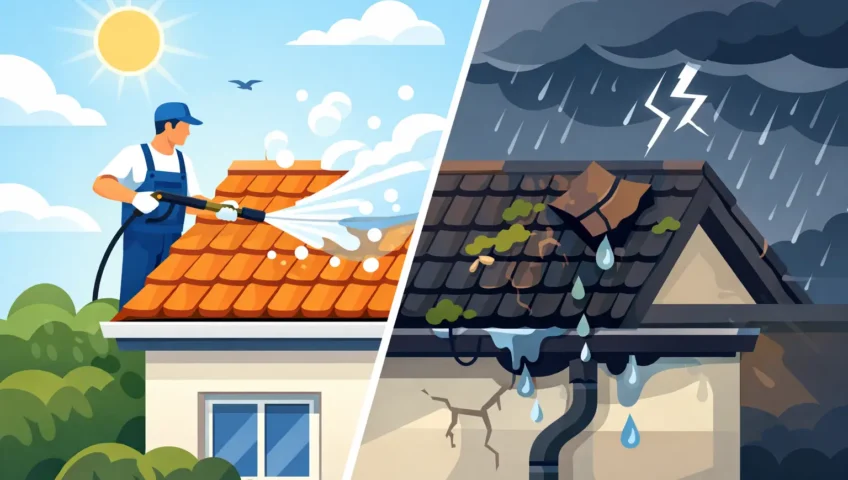
A roof rarely fails all at once. More often, the trouble starts with moss holding moisture, debris blocking water flow, or grime hiding cracked tiles and worn mortar. That is why homeowners often ask, can roof cleaning prevent damage? In many cases, yes – but only when it is done properly, at the right time, and with a clear eye on the roof’s overall condition.
In Scotland, roofs take a beating from rain, wind, frost and damp conditions. It does not take long for moss, algae and general build-up to settle in, especially on shaded roof slopes. What looks like a cosmetic issue from the ground can gradually turn into something more expensive. Cleaning does not fix every roofing problem, but it can stop small issues from getting worse and help spot repairs before they become urgent.
Can roof cleaning prevent damage or just improve appearance?
A lot of people assume roof cleaning is mainly about kerb appeal. A cleaner roof certainly improves the look of a property, but the practical side matters far more. When moss and debris build up, they trap moisture against the roof surface. On tiled and slate roofs, that extra moisture can increase wear over time, especially through repeated freezing and thawing in colder weather.
Moss can also creep into overlaps and gaps. As it thickens, it may lift tiles slightly or interfere with normal water run-off. Once water stops draining as it should, it can find its way into places it should not be. That is when you start seeing damp patches, slipped materials, stained soffits or overflowing guttering.
So yes, roof cleaning can prevent damage, but the real answer is more precise than that. It helps prevent moisture-related deterioration, blocked drainage, hidden defects and unnecessary strain on roofing materials. It is preventative maintenance, not a cure-all.
How dirt, moss and algae cause roofing problems
The biggest issue is usually moss. Moss acts like a sponge, holding rainwater for longer than the roof surface was designed to. That constant dampness can shorten the life of tiles, encourage surface erosion and create ideal conditions for further growth.
Then there is the run-off problem. When moss breaks loose, it often ends up in the gutters and downpipes. That can cause blockages, and blocked guttering sends water back towards the roofline and walls instead of safely away from the property. In heavy rain, that can lead to overflowing water, external staining and even internal damp if left too long.
Algae and lichen are slightly different. They do not always cause the same thick build-up as moss, but they can still hold moisture and make it harder to assess the roof properly from a visual inspection. Dirt and biological growth can mask cracked tiles, defective flashing and other early signs of wear.
For landlords and property managers, this matters for another reason. A neglected roof is harder to inspect, harder to maintain and more likely to produce reactive costs at the wrong time.
When roof cleaning is most likely to help
Cleaning is most effective when the roof is structurally sound but affected by surface build-up. If the tiles or slates are broadly in good condition and the issue is moss, algae, silt or general debris, then cleaning can be a very worthwhile step.
It is particularly useful when a roof has shaded sections, overhanging trees or slow-draining areas where organic matter tends to collect. It also helps after winter, when damp weather may have encouraged growth and frost may have put added pressure on the roof covering.
In these cases, cleaning can reduce retained moisture, improve drainage and make future inspections far more accurate. It can also reveal whether the roof needs minor repairs, protective treatment or more targeted restoration work.
For many properties, that is where the real saving comes in. A smaller repair carried out after cleaning is usually far less costly than leaving the roof untouched until leaks appear inside.
When cleaning alone will not solve the problem
There is an important trade-off here. If a roof already has damaged felt, perished pointing, loose ridge tiles, failing flashing or broken slates, cleaning alone will not prevent ongoing problems. In some cases, cleaning may expose just how much wear is already present.
That is not a reason to avoid it. It is a reason to approach it properly. A roof should never be treated as if every problem is dirt-related. Sometimes moss is the symptom of age and long-term moisture retention, not the root cause.
Older roofs often need a combined approach. That may include cleaning, minor repairs, gutter clearance and, where suitable, a roof coating or protective treatment. The right solution depends on the roof material, its age, previous repairs and how severe the build-up has become.
Why the cleaning method matters
This is where many problems start. Poor roof cleaning can cause damage instead of preventing it. Aggressive methods can dislodge tiles, strip protective finishes or force water where it should not go.
That is why the method should match the roof. Some roofs respond well to careful manual moss removal followed by a suitable treatment. Others may need a low-pressure wash or soft wash approach. Fragile, ageing or heavily weathered roofs need particular care.
What you want is not the fastest possible clean. You want a method that clears harmful build-up without shortening the life of the roof. A professional inspection before the work starts is just as important as the cleaning itself.
This is especially true on older properties across Glasgow, Hamilton and surrounding areas, where roof types and ages can vary significantly from one street to the next. A modern tiled roof and an older slate roof should not be handled in the same way.
Signs your roof may need cleaning before damage sets in
Some warning signs are easy to spot from the ground. Thick green moss along tile edges, black staining, vegetation in gutters and water spilling over during rain are all clear indicators that maintenance may be overdue.
Less obvious signs include damp patches in upper rooms, staining near external walls, bits of moss collecting around downpipes, or tiles that appear uneven after long periods of growth. Sometimes the roof simply looks darker and wetter than it should, even after dry weather.
If you can see any of these issues, it is worth having the roof checked sooner rather than later. Leaving it until there is an internal leak usually means the problem has already moved beyond simple maintenance.
The value of combining cleaning with inspection
One of the strongest arguments for roof cleaning is that it makes proper inspection possible. A roof hidden under moss and debris is much harder to assess. Once cleaned, defects become clearer. Cracks, slipped tiles, failed seals and worn ridge lines are easier to identify and deal with.
That is where experienced roofing contractors add real value. Instead of treating cleaning as a one-off cosmetic job, they look at the full condition of the roof, the guttering and the roofline. If there is a small issue developing, it can be picked up early.
For many customers, that is the difference between a manageable repair bill and a larger job later on. Varey Contracts Ltd often sees cases where basic maintenance could have prevented more extensive roofing work if it had been carried out earlier.
Is roof cleaning worth it for every property?
Not always on the same schedule, and not to the same extent. A newer roof in a more open, sunny position may need very little attention beyond routine inspection and gutter clearing. A roof under trees or in a damp, shaded spot may need more regular maintenance.
Commercial and agricultural buildings also vary. Large roof areas can collect significant debris, and drainage performance becomes even more important. On these properties, preventative maintenance is often less about appearance and more about protecting operations, stock and internal areas from water ingress.
The key is timing. Cleaning is worth it when it addresses build-up before that build-up leads to blocked drainage, trapped moisture or hidden deterioration. Leave it too long, and the work may shift from maintenance to repair.
A practical way to think about roof cleaning
Think of roof cleaning as part of protecting the whole property, not just smartening the top of it. A clean roof sheds water better, allows defects to be spotted sooner and reduces the chance of moss and debris causing avoidable wear. It will not repair broken materials or reverse age, but it can help you avoid the kind of neglect that turns a minor issue into a major one.
If your roof is showing visible moss, blocked gutters or signs of poor drainage, it is sensible to have it checked. The right advice should be honest and practical. Sometimes a clean is enough. Sometimes a clean plus repairs is the better investment. Either way, acting early usually gives you more options and lower costs.
A roof does not need attention only when it leaks. Often, the best time to deal with it is when the warning signs are still outside and easy to manage.


