

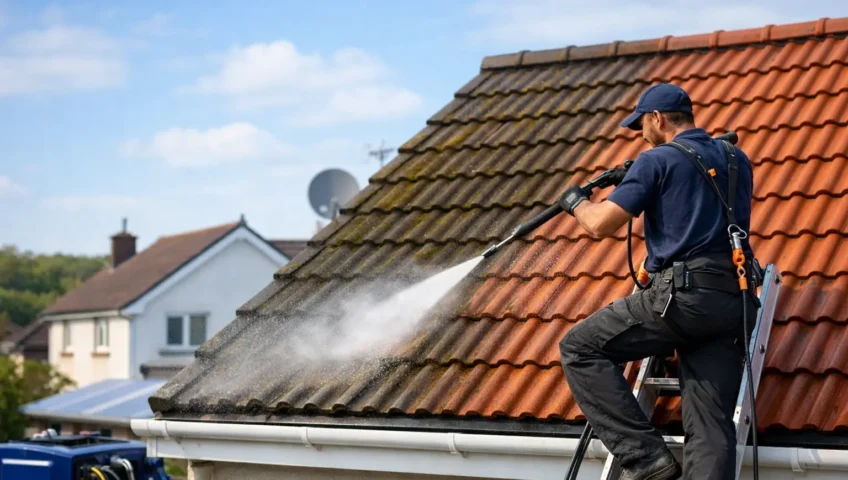
A roof can look sound from the ground while moss is quietly causing trouble around the tiles, gutters and roof edges. For roof cleaning Coatbridge homes can rely on, the aim is not simply to make the property look tidier. It is to remove damaging growth carefully, check the condition of the roof covering and help prevent avoidable repair bills.
Coatbridge properties deal with plenty of rain, damp spells and shaded areas where moss, algae and lichen can take hold quickly. Left alone, that growth holds moisture against the roof surface, blocks gutters and can work its way beneath tiles. A professional clean is a practical piece of property maintenance that can protect both the appearance and working life of your roof.
Why roof cleaning matters for Coatbridge homes
Moss is often dismissed as a cosmetic issue, particularly when it first appears as a green patch near the ridge or along the lower rows of tiles. In reality, a thick build-up can create several problems. It retains rainwater, adds weight when wet and sheds into gutters and downpipes. Once the drainage system is blocked, water can overflow against fascias, external walls and entrances.
On tiled roofs, moss can lift or disturb individual tiles as it grows and freezes during colder weather. It does not mean every moss-covered roof needs replacing, but it does mean the roof deserves a proper inspection. Catching loose tiles, worn mortar, damaged flashing or cracked sections during cleaning is far less disruptive than discovering them after a leak develops.
A clean roof also gives you a clearer view of its true condition. Stains and organic growth can hide cracked tiles and weak areas, making it harder to plan sensible maintenance. For landlords and property managers, this is particularly useful when keeping on top of several properties and avoiding unexpected call-outs.
The right way to clean a roof
Roof cleaning is not a job for aggressive pressure washing. High-pressure water can strip surface finishes, force water beneath tiles, loosen pointing and damage older roof coverings. The right approach depends on the material, the age of the roof, its pitch and the level of moss growth.
For many homes, controlled manual moss removal followed by a suitable treatment is the safest option. Moss is carefully lifted away using appropriate tools, rather than blasted off. The remaining spores can then be treated to slow regrowth, helping the roof stay cleaner for longer. This process is slower than a quick jet wash, but it is designed to protect the tiles and surrounding roofline.
Slate roofs need even more care. Natural slate can be long-lasting, but it is not something to walk across or clean carelessly. A trained roofing team will assess access, work from suitable equipment and avoid methods that could crack slates or damage fixings. The same caution applies to older concrete tiles, where a heavy-handed clean may do more harm than good.
Gutter clearance should be part of the job
Cleaning the roof without clearing the gutters leaves half the problem behind. Moss and debris naturally fall during the work, so gutters and downpipes should be checked and cleared before the job is signed off. Water should be able to run freely away from the roof, especially before a period of heavy rain.
This is also a good time to inspect gutter joints, brackets, soffits and fascias. Small issues such as a sagging gutter or leaking union are usually straightforward to put right. If they are ignored, water may track behind the guttering and cause damage that is much more expensive to repair later.
Signs your roof is ready for professional cleaning
You do not need to wait for a blocked downpipe or visible leak. A roof inspection is worthwhile if moss is spreading across the tiles, collecting in gutters or hanging over the roof edge. Dark streaks, green staining and pale lichen patches can also indicate that moisture is remaining on the roof surface.
Look out for overflowing gutters during rain, damp marks near the top of external walls, or moss collecting on paths and driveways below. These are often signs that debris is washing off the roof and the drainage system is struggling to cope.
The timing depends on the surroundings. A home beneath trees, beside parkland or in a sheltered position may need attention more often than an exposed property with good sunlight and airflow. Many homeowners choose to have the roof and gutters checked every year or two, while heavily shaded roofs may benefit from more regular maintenance.
Cleaning, repairs or coating: which is best?
A roof clean can make a major difference, but it is not a substitute for repair work where the roof covering has failed. If tiles are broken, slipped or missing, those faults should be repaired as part of the job. Likewise, damaged leadwork, failing ridge mortar and perished flashing need attention before any protective treatment is considered.
For a roof that is structurally sound but looking tired, a roof coating may be an option after thorough cleaning and preparation. Coatings can improve appearance and add an extra protective finish, but they are not right for every roof. The roof must be dry, stable and in suitable condition. Applying a coating over loose tiles, trapped moisture or unresolved leaks is a false economy.
This is why an honest inspection matters. The cheapest-looking option is not always the most cost-effective one. Sometimes a careful clean and a few minor repairs will give the roof years of service. In other cases, repairs and coating offer a sensible alternative to a full replacement. Where the roof is beyond repair, a contractor should say so clearly rather than sell a treatment that will not solve the underlying problem.
What a professional roof cleaning visit should include
A proper service starts with an assessment of the roof type, access requirements, moss build-up and visible defects. The team should explain the recommended cleaning method and flag any repairs that should be completed first. There should be no guesswork about what is included or surprise extras once the work has begun.
Careful preparation protects the surrounding property. That includes managing debris, taking care around conservatories, gardens and driveways, and ensuring gutters are cleared at the end. The roof should be inspected again once clean, because hidden faults are often easier to spot after moss and dirt have been removed.
Ask for a written quote that sets out the work proposed. It is also sensible to ask whether gutter clearance, moss treatment, minor tile repairs and waste removal are included. A clear quote lets you compare like for like and decide what your property genuinely needs.
Choosing a local roofing contractor
Roof cleaning involves working at height and handling a key part of your property, so experience matters. A local roofing specialist should be able to advise on slate, tile and flat roof surfaces, not offer one method for every job. They should also be prepared to explain whether cleaning is suitable at all.
Varey Contracts Ltd provides roof cleaning, repair and restoration work across Coatbridge and the wider Lanarkshire area, with free written, no-obligation quotes. As a family-run contractor, the focus is on practical advice, careful workmanship and solutions that protect your property without pushing unnecessary replacement work.
If you are planning to sell, have recently noticed blocked gutters, or simply want to stop moss getting worse, arranging an inspection now can make the next wet spell far less worrying. A clean, free-draining roof is one of the simplest ways to look after the home beneath it.


