

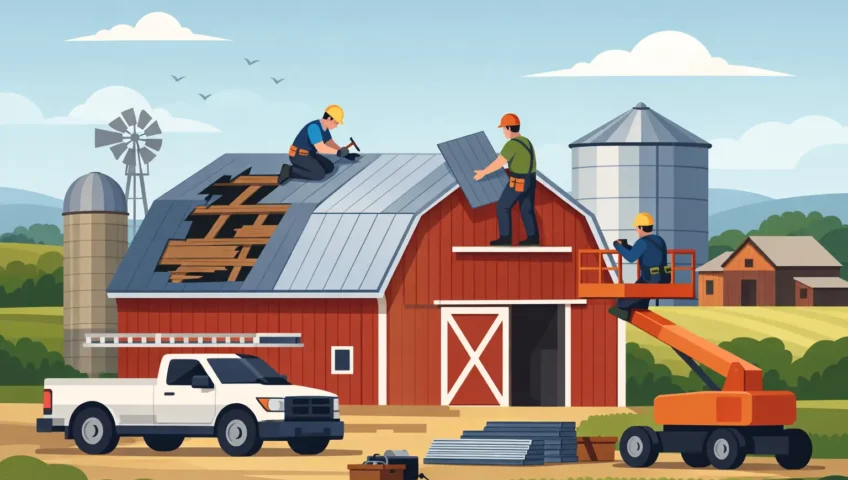
A wet patch beneath a roof sheet can look minor after a long spell of rain. In a working barn, however, that small fault can quickly mean damaged feed, rusting machinery, unsafe electrics or damp bedding. Experienced barn roof repair contractors find the cause before it becomes a bigger and more expensive problem, then recommend a practical repair that suits the building and its use.
For agricultural property owners, the priority is rarely making a roof look new for its own sake. It is keeping livestock sheltered, stock dry, equipment protected and day-to-day work moving. That calls for a contractor who understands that farm buildings need durable, sensible repairs carried out with minimum disruption.
Why barn roof problems need prompt attention
Barn roofs take a constant battering from Scottish weather. Wind can loosen fixings and lift sheet edges. Heavy rain exposes weak laps, cracked flashings and blocked gutters. Frost can worsen small cracks, while condensation inside an uninsulated building may be mistaken for a leak when the real issue is poor ventilation.
The age and construction of the barn matter too. Older buildings may have corrugated fibre cement sheets, traditional slate, metal cladding or mixed roof sections added over many years. A repair that works on one roof may not be appropriate for another. The aim should be to locate the source of water entry, assess the surrounding roof area and deal with the cause rather than simply sealing the visible stain below.
Leaving defects unchecked often increases the eventual cost. Water can rot timber purlins, corrode steelwork, weaken insulation and damage stored materials long before it becomes obvious from the ground. If a section of roof is moving in high winds, or water is entering near electrical fittings, it should be treated as urgent.
What barn roof repair contractors should assess
A proper inspection begins with more than a glance at the roof from a distance. A dependable contractor will look at the overall condition of the roof covering, ridge line, flashings, gutters, rooflights, fixings and internal structure where access is safe. They should also ask how the building is used, because a machinery store, livestock shed and grain store each have different requirements.
The roof covering and fixings
Loose, cracked or punctured sheets are common causes of leaks in agricultural roofs. Metal sheets can corrode around fixing points, especially where washers have failed. Fibre cement sheets may crack from age, impact or movement. Missing ridge caps and damaged verge details allow wind-driven rain to reach the roof space even when the main sheets appear sound.
A lasting repair may involve replacing damaged sheets, renewing fixings and sealing or replacing defective laps. In some cases, a small local repair is all that is needed. Where deterioration is widespread, repeated patching can become poor value, and a phased renewal may be the more cost-effective option.
Flashings, valleys and roof junctions
Leaks often begin where two materials or roof levels meet. Flashings around chimneys, rooflights, vents and abutments need to direct water away cleanly. Valleys can collect moss, leaves and debris, creating standing water that finds its way beneath the covering.
These areas deserve close attention after storms. Applying mastic alone may offer a short-term fix, but it is not always suitable for a failed flashing or badly corroded junction. The right repair depends on the roof material, the movement in the structure and the amount of water the area handles.
Gutters and drainage
Overflowing gutters can make a sound roof look like it is leaking. On barns, large roof areas shift a substantial volume of rainwater quickly. Blocked gutters, damaged downpipes and poorly aligned outlets can send water back towards the eaves, saturate walls and create muddy, slippery access around the building.
Clearing and repairing the drainage system is often a straightforward way to protect roof edges and the building below. If gutters are undersized or repeatedly overwhelmed, a contractor may recommend an improved drainage arrangement rather than another temporary repair.
Internal moisture and ventilation
Not every drip comes through a damaged roof. Warm, moist air from livestock, stored crops or regular washing can condense on cold roof sheets. This can produce widespread dripping, particularly early in the morning, and may lead to mould, corrosion and damp bedding.
The solution could involve improving ventilation, fitting suitable anti-condensation measures or reviewing insulation. It is worth getting the diagnosis right before paying for roof repairs that will not solve the underlying problem.
Choosing barn roof repair contractors with care
Agricultural roofing is specialist work. A barn can be tall, exposed and difficult to access, while operations inside may need to continue throughout the repair. Choose a contractor that can explain the issue clearly, set out the proposed work in writing and be realistic about timescales, access and weather delays.
A free, no-obligation inspection and written quote give you a clear basis for comparing options. The quote should distinguish between essential repairs and sensible preventative work, so you can make an informed decision rather than being pushed into a full replacement unnecessarily.
It is also sensible to ask how the work will be managed around livestock, machinery and stored goods. Will the area below need to be cleared? Is there a safe plan for access equipment? How will loose debris and old materials be handled? Practical questions like these make a real difference on an occupied farm site.
Price matters, but the cheapest quote is not always the best value. A low figure may cover only a visible hole, while a more thorough repair addresses failed fixings, damaged flashing and drainage that caused the problem. Equally, a contractor should not recommend replacing an entire roof where targeted repairs and protective coatings can extend its serviceable life.
Repair, coating or replacement: making the right call
The best approach depends on the roof condition. A roof with a handful of damaged sheets, isolated leaks and sound supporting structure is often a strong candidate for repair. Replacing local sections, renewing flashings and improving guttering can provide years of reliable protection at a fraction of the cost of a full re-roof.
Where a roof is weathered but structurally sound, a suitable roof coating system may help protect the surface and improve water resistance. Coatings are not a cure for unstable sheets, serious corrosion or failed timbers, but they can be a valuable restoration option when correctly specified and applied to a properly prepared roof.
Full replacement becomes more sensible when defects are widespread, repairs have become frequent, the roof structure is compromised or the building needs upgraded insulation, rooflights or ventilation. It is a bigger investment, but it may reduce ongoing maintenance and allow the building to work better for its future use.
An honest contractor should explain these trade-offs. There is no benefit in selling a replacement roof to a customer who only needs well-planned repairs, and there is no value in repeatedly patching a roof that has reached the end of its working life.
Preparing your barn before repairs begin
A little preparation helps work proceed safely and efficiently. Move machinery, feed, valuable stock and other vulnerable items away from the repair area where possible. Let the contractor know about restricted access, overhead cables, livestock movements, slurry areas or any parts of the site that cannot be blocked.
If a leak has affected electrics, do not assume the area is safe because the rain has stopped. Arrange for the relevant electrical checks where needed, and keep people away from damaged ceilings, sagging insulation or loose roof materials. Temporary measures may reduce immediate water ingress, but they should not replace a proper inspection.
For farms and property owners across Glasgow, Hamilton, Lanarkshire and surrounding areas, Varey Contracts Ltd provides practical roofing repairs with clear written quotes and a focus on protecting the building without unnecessary expense.
Preventative maintenance saves disruption later
Barn roofs benefit from regular checks, particularly after high winds and before winter. Look for loose sheets, missing fixings, blocked gutters, slipped ridge pieces, damaged rooflights and water marks on internal timbers. From ground level, also watch for sagging lines, corrosion streaks and overflowing gutters during rainfall.
Do not climb onto an ageing or fragile roof to investigate it yourself. Some agricultural roof materials can be unsafe to walk on, and a fall through a roof can be catastrophic. A professional inspection is the safer route and gives you a clearer picture of what work is genuinely required.
A well-maintained barn roof protects much more than the structure. It protects the work, stock and equipment inside it. Acting when the first signs appear gives you more repair options, better control over costs and far less chance of an inconvenient leak turning into a major interruption.


