

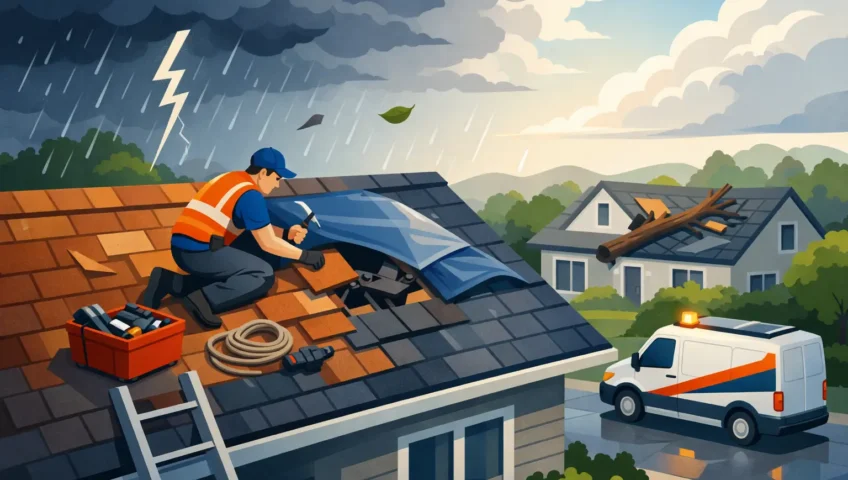
The sound that usually tells you something is wrong is not the wind. It is the drip in the loft, the damp patch spreading across a ceiling, or the sight of slates in the garden the morning after a storm. In those moments, emergency roof repairs: what to do after storm damage becomes less of a search term and more of a pressing job that needs handled quickly and properly.
The first thing to know is that speed matters, but so does safety. A storm-damaged roof can leave your property exposed within hours. Water finds its way into insulation, timbers, plasterwork and electrics far faster than most people expect. At the same time, climbing onto a wet roof in high winds or poor light is one of the worst things a homeowner can do. The right response is calm, practical and focused on limiting further damage until a professional repair can be carried out.
Emergency roof repairs after storm damage start with safety
Before you look at the roof itself, look at the area around the property. If slates, ridge tiles, branches, guttering or other debris have come down, keep people clear. That includes children, pets, tenants, staff and anyone passing through the area. If there is visible sagging, a partially collapsed section, or signs that water has reached light fittings or electrical points, switch off the power to the affected area if it is safe to do so.
What you should not do is get a ladder out and attempt a close inspection during the storm or straight after it if conditions are still poor. Roof damage often looks smaller from ground level than it really is. A few missing tiles can also mean torn felt, loosened battens or damaged flashing underneath. If the roof is slippery, unstable, or still taking the full force of wind, leave it alone.
A simple ground-level check is usually enough to confirm whether urgent attention is needed. Look for missing slates or tiles, displaced ridge lines, bent or detached flashing, overflowing guttering, fallen masonry around the chimney, and any pieces of roof covering on the ground. Inside, check the loft if it is safe and dry enough to enter. Daylight showing through the roof, wet insulation, drips and staining all point to active storm damage.
What to do inside the property while you wait
Once you know there is a problem, the next step is damage control. Move furniture, soft furnishings, stock or stored items away from the affected area. Place buckets or containers under drips, and use towels or sheeting to protect flooring. If water is bulging a ceiling, do not ignore it. That can mean a significant amount of trapped water, and the ceiling may give way.
If safe access is possible, it can help to place waterproof sheeting under the leak in the loft to guide water into a bucket. This is only worth doing if the area is stable and there are no electrical hazards. The aim is not to repair the roof from inside. It is simply to reduce internal damage until the outside repair is completed.
Take photographs as you go. That means the exterior from ground level, debris that has fallen, the interior damage, and any affected contents. Clear photos help with insurance claims and also give a roofing contractor a better sense of urgency before arriving on site.
Emergency roof repairs: what to do after storm damage if the leak seems small
A common mistake is assuming a minor leak can wait because the weather has improved. In practice, storm damage rarely stays neatly contained. A tile lifted by wind may have cracked another beside it. Flashing that looks only slightly loose can let in a surprising amount of water. Gutters torn out of line can direct rainfall back towards the roof edge and fascia boards.
That is why even a small visible issue should be treated as urgent if it has happened after heavy wind or rain. The repair itself may be straightforward, but the knock-on damage grows quickly if the roof is left open. Timbers can absorb moisture, insulation loses effectiveness when soaked, and repeated ingress can turn a repair job into a much larger restoration.
There is also the issue of hidden damage. Flat roofs can suffer punctures or lifted seams that are not obvious from below. Pitched roofs can lose fixings without losing the covering straight away. Chimneys and leadwork may shift slightly, creating a weak point that only becomes obvious during the next downpour. That is why a proper inspection matters, even if the problem appears manageable.
Temporary repairs have their place – but only as a short-term measure
Professional roofers will sometimes carry out temporary weatherproofing to make a property safe before returning for a full repair. That might include securing a tarpaulin, sealing an exposed area, making loose sections safe, or stabilising damaged guttering and flashings. In genuine emergency situations, this is often the right approach because it stops further ingress and buys time for materials, access equipment or safer weather conditions.
What temporary work should not become is a long-term solution. A patch that gets you through the week is not the same as a proper repair. If storm damage has affected multiple areas, a rushed fix in one spot may leave another weak section untouched. Honest roofing advice matters here. Sometimes a targeted repair is all that is required. Sometimes the damage reveals wider wear that has been building for years.
That is especially true on older roofs where storms do not create every problem from scratch – they expose what was already failing. Loose mortar on ridge tiles, brittle slates, aged felt and worn flashings may all have been close to the point of failure before the weather turned.
When to call for urgent professional help
If water is entering the property, roof coverings are missing, chimney materials have come loose, or parts of the roofline are hanging or detached, you need prompt professional attention. The same applies if a commercial or agricultural building has been affected. A leak over a living room is serious enough, but storm damage above stock, equipment, livestock areas or tenanted spaces can escalate quickly.
A reliable contractor should be able to assess the issue, make the area safe and explain clearly whether you need an immediate repair, a temporary measure followed by scheduled works, or a larger section replaced. For homeowners and property managers, that clarity is half the value. You want to know what has happened, what needs done now, and what can reasonably wait.
In parts of Scotland, where driving rain and high winds put real pressure on roofs, quick response is not a luxury. It protects the building and often saves money. Varey Contracts Ltd regularly deals with urgent roofing problems across Glasgow, Hamilton and surrounding areas, and the same principle applies every time – early action usually means a simpler, more cost-effective repair.
What a roofer will usually check after a storm
A thorough inspection goes beyond the obvious missing tile. On a pitched roof, the contractor will usually check slates or tiles, ridge and hip lines, underlay, battens, flashing, valleys, chimneys, verges, soffits, fascias and guttering. On flat roofs, they will look for splits, lifted edges, ponding, punctures, failed joints and damage around outlets or upstands.
They should also consider whether the storm damage is isolated or part of a bigger pattern of deterioration. That is not an attempt to upsell if the advice is genuine. It is the difference between solving the leak you can see and dealing with the cause of repeated failure. In some cases, a repair and protective coating or targeted restoration work can extend the life of the roof and avoid the cost of a full replacement. In other cases, extensive damage means replacement is the more sensible long-term option.
It depends on the age of the roof, the type of covering, how widespread the damage is, and whether water has already affected the structure beneath.
Insurance, costs and practical decisions
Many people ask the same question after storm damage – should I go through insurance or pay for the repair directly? The answer depends on the scale of the damage, your excess, and the condition of the roof before the storm. Sudden storm damage may be covered, but general wear and tear usually is not. That is another reason photographs and a prompt professional inspection are useful.
For smaller repairs, paying directly can sometimes be simpler than making a claim. For larger losses, especially where internal damage is involved, insurance may be worth pursuing. Either way, a written quote and a clear description of the works help you make an informed decision.
The cheapest repair is not always the best value if it only deals with the surface problem. Equally, not every storm-damaged roof needs major works. Good advice should be straightforward, practical and based on the actual condition of the roof.
Preventing the next emergency roof repair after storm damage
Not every roofing emergency can be avoided, but many can be reduced by keeping the roof maintained. Loose tiles, blocked gutters, cracked flashing, damaged pointing and moss build-up all make a roof more vulnerable when bad weather arrives. Regular inspections, especially after winter and before storm season, give you the chance to catch wear early.
That matters for homeowners, landlords and commercial property managers alike. A roof does not need to be brand new to perform well, but it does need to be looked after. Small repairs done at the right time are usually far more affordable than emergency call-outs after a storm has opened the roof up.
If your property has been hit by high winds or heavy rain, act quickly, stay safe and get the damage checked properly. A fast, honest repair now is often what prevents a much bigger problem later.


