

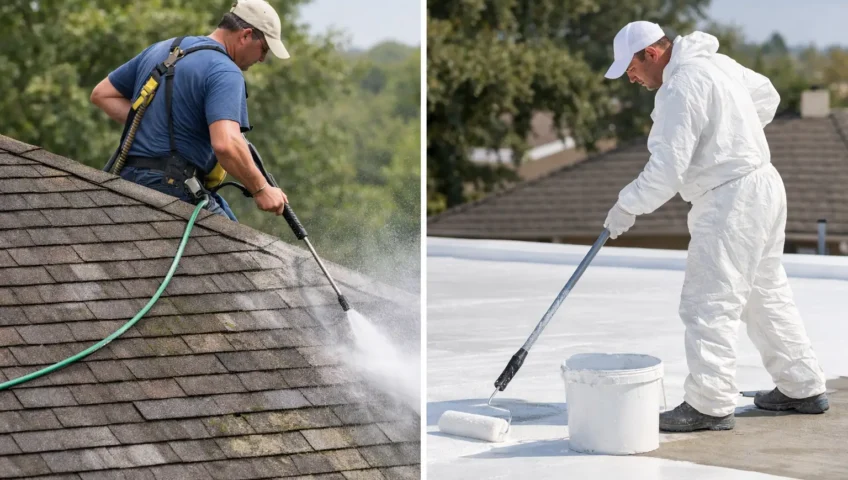
A roof can look tired long before it needs to be replaced. Moss, algae staining and years of Scottish weather often make homeowners question whether a thorough clean is enough or whether a protective treatment is the better investment. When weighing up roof cleaning versus roof coating, the right answer depends on the condition of the tiles or slates beneath the dirt, not simply how the roof looks from the ground.
Cleaning restores the appearance of a sound roof. Coating goes further by adding a protective finish after suitable preparation and repairs. Both can be cost-effective alternatives to premature replacement, but neither should be used to hide broken tiles, failing mortar, damaged flashing or an active leak.
What roof cleaning actually does
Roof cleaning removes organic growth, surface grime, loose moss and staining from roof coverings. This is particularly valuable in Glasgow and Lanarkshire, where regular rain, shaded gardens and mature trees can leave roofs damp for long periods. Moss holds moisture against tiles, blocks gutters as it sheds and can gradually interfere with drainage around laps and edges.
A professionally cleaned roof immediately looks brighter, but the practical benefit matters just as much. Removing heavy growth helps rainwater run freely into the gutters and makes the true state of the roof easier to inspect. Cracked tiles, slipped slates, worn ridge pointing and damaged leadwork can be identified rather than concealed beneath moss.
The safest method depends on the roof material, age and condition. Older slate roofs and weathered concrete tiles need a careful approach. High-pressure washing can damage fragile surfaces, dislodge pointing or force water where it should not be. A competent contractor will assess the roof first and select an appropriate cleaning method, with attention to protecting gutters, surrounding paths and garden areas.
When cleaning is usually the right choice
Cleaning is often the sensible option where the roof is structurally sound and the main problem is moss, algae or dull surface staining. It suits owners who want to improve kerb appeal, clear blocked gutters and inspect their roof properly without paying for an additional finish they do not need.
It can also be a good first step before deciding on further work. Once the growth is removed, it becomes much easier to judge whether the roof covering still has years of service left or whether repairs and a coating would offer better long-term value.
A clean roof will not become permanently moss-free. Spores return, especially on north-facing slopes and roofs beneath trees. However, correct cleaning and suitable after-treatment can slow regrowth and make future maintenance more manageable.
What a roof coating adds
A roof coating is a specialist protective finish applied to suitable roof tiles after cleaning, preparation and any necessary repairs. It is not paint applied over dirt. For a coating to adhere properly and perform as intended, the roof must be dry, clean, stable and free from defects.
On appropriate concrete tiled roofs, a quality coating can refresh the colour, improve water shedding and provide a more uniform appearance. It may also help reduce the rate at which surface dirt and biological growth take hold. For homeowners looking to extend the serviceable life of an ageing but fundamentally sound roof, coating can be a practical restoration option at a lower cost than a full reroof.
The condition of the roof is crucial. Coating cannot repair rotten battens, cure condensation in the loft, fix faulty flashings or make cracked tiles sound again. Any contractor suggesting a coating without checking these points should be treated with caution.
When roof coating is worth considering
Coating is most useful where roof tiles have become faded, porous or weathered but remain securely fixed and structurally sound. It can be particularly attractive for properties where appearance matters, such as rental homes being prepared for new tenants, commercial premises, or homeowners improving the exterior before sale.
It may also make financial sense where a full replacement is not yet required. Rather than replacing a roof simply because it looks worn, repairs, cleaning and coating may provide several more years of protection. That does not mean coating is always the cheapest option. The preparation work is significant, and a properly completed job costs more than cleaning alone.
Slate, asbestos cement sheets, heavily damaged tiles and very old roof coverings need individual assessment. Not every surface is suitable for a coating, and forcing a one-size-fits-all solution can create problems rather than solve them.
Roof cleaning versus roof coating: the key differences
The clearest difference is purpose. Cleaning removes what is sitting on the roof. Coating adds a new protective layer to a prepared roof surface. One is mainly maintenance and appearance work; the other is a restoration treatment.
Cleaning is generally less expensive because it involves fewer materials and less preparation. It can be an excellent choice for a roof in good order that has simply been neglected. Coating costs more upfront, but it can offer a longer-lasting visual improvement and extra surface protection where the existing tiles are suitable.
The timescale also differs. A straightforward roof clean can often be completed more quickly, although access, roof size and the level of moss will affect this. Coating takes longer because the roof needs to be cleaned, repaired where required, allowed to dry and then treated in suitable weather conditions. Rushing this process risks poor adhesion and a patchy finish.
There is also a difference in expectations. A clean roof should look fresher, but natural variation in older tiles will remain. A coating creates a more consistent finish and can bring faded tiles closer to their original colour. Neither option should be sold as a permanent cure for all roofing issues.
Start with the roof condition, not the desired finish
Before choosing either service, the roof should be checked from close range. Look for slipped or missing tiles, cracking, loose ridge tiles, worn pointing, damaged valleys, failed flashing and signs of water ingress in the loft. Gutters and downpipes should be considered too, as moss cleared from the roof can quickly cause blockages if they are not dealt with properly.
If there is an active leak, repair comes first. If tiles are badly deteriorated or the roof structure is near the end of its life, replacement may be the more honest and economical recommendation. Spending money on a cosmetic treatment for a roof that needs major work rarely represents good value.
For many properties, the best route is a combination of services: targeted repairs, careful cleaning, gutter clearance and, where suitable, a protective coating. This approach protects the property while avoiding the cost of a full reroof before it is genuinely necessary.
Questions to ask before accepting a quote
A clear written quote should explain what will be cleaned or repaired, how access will be managed, whether gutters are included and what preparation is needed before a coating. If coating is recommended, ask whether damaged tiles, ridge mortar and flashing will be inspected and repaired first.
It is also worth asking what product is proposed, what guarantee applies to the workmanship and whether the contractor has experience with your roof type. A low price can be tempting, but poor preparation is the main reason coating jobs fail early. The value lies in the inspection, repairs and careful application, not just in putting colour back onto a roof.
Varey Contracts Ltd provides free written quotes for roof cleaning, repairs and coating work across Glasgow, Hamilton and surrounding areas. A proper inspection gives you a practical recommendation based on the roof you have, rather than a sales pitch for work you may not need.
If moss is spreading, gutters are overflowing or tiles are starting to look weathered, deal with it while the options are still open. Early inspection can often turn a worrying roof into a straightforward maintenance job.


