

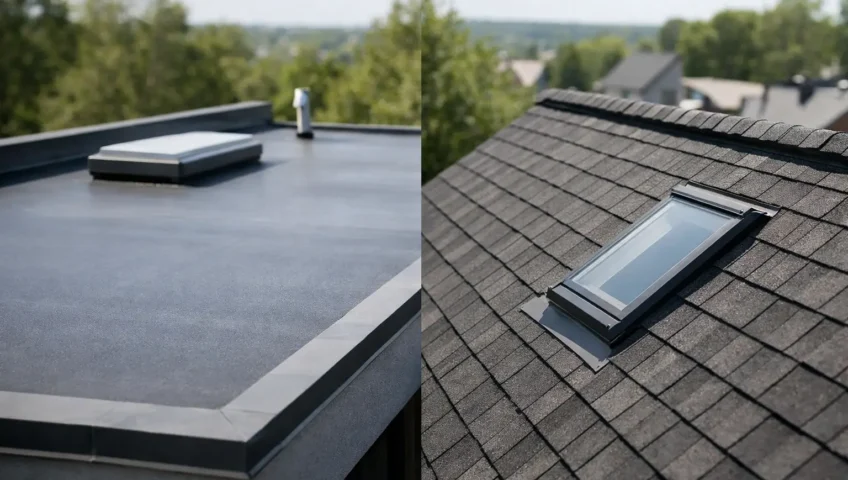
A roof choice is rarely just about appearance. It affects how your property handles driving rain, wind, heat loss, maintenance access and future repair costs. When weighing up flat roofing versus pitched roofing, the right answer depends on the building, its existing structure and what you need the roof to do over the years ahead.
For homeowners, landlords and commercial property managers across Glasgow and Lanarkshire, the local climate makes workmanship and drainage especially important. A well-specified flat roof can be a highly practical, long-lasting solution. A properly installed pitched roof remains a strong choice for many homes. Neither is automatically better in every situation.
Flat Roofing Versus Pitched Roofing: The Main Difference
A pitched roof has a visible slope, usually finished with slate, tiles or sheets. The angle directs rainwater towards gutters and downpipes, and the roof void can provide useful space for insulation, ventilation and services.
A flat roof is not completely level. It is built with a slight fall so water runs towards outlets, gutters or drainage channels. Modern flat roofing systems can include high-performance felt, EPDM rubber, GRP fibreglass or single-ply membranes. They are commonly used for extensions, garages, porches, dormers, commercial buildings and some agricultural properties.
The decision should not be made by material alone. The roof’s size, shape, use, age, exposure to weather and condition of the supporting structure all matter.
Cost: Initial Price Versus Long-Term Value
Flat roofs are often less expensive to install on a straightforward single-storey extension or garage because they use less structural timber and have a smaller surface area. Access can also be easier, which may reduce labour time. That said, prices vary considerably depending on the chosen system, insulation build-up, edge details, roof lights and drainage work.
A pitched roof usually has a higher initial cost. The timber structure is more involved, and slate or tile work is skilled, time-consuming work. On a traditional Scottish home, however, a pitched roof can suit the character of the property and offer decades of service when correctly installed and maintained.
The cheapest quote is not always the most cost-effective option. A flat roof with poor falls, weak joints or inadequate outlets can lead to standing water and early failure. Equally, re-roofing a pitched roof without addressing damaged battens, underlay, flashings or guttering can create expensive problems later.
A detailed written quote should explain what is being removed, what insulation is included, how water will drain, which materials will be used and what guarantee applies. This gives you a fairer basis for comparing prices.
Drainage and Scottish Weather Conditions
Rain is the biggest concern most customers raise about flat roofs. The concern is understandable, but the issue is not that the roof is flat. The issue is whether it has been designed and installed to move water away reliably.
A quality flat roof needs correctly formed falls, sufficient drainage capacity and sound detailing around upstands, roof lights, pipes and adjoining walls. Gutters and outlets must be kept clear of leaves, moss and debris. Small puddles that disappear shortly after rainfall may not be a concern, but persistent standing water should be inspected.
Pitched roofs naturally shed rain faster because of their slope. This can make them more forgiving where gutters are maintained and tiles or slates are in good condition. However, wind can lift cracked tiles, damage ridge mortar and expose weak flashing details. Slate roofs can also develop slipped or broken slates, particularly on older properties.
For exposed sites around Glasgow, Hamilton and the wider Lanarkshire area, both styles need materials and fixings suited to wind-driven rain. The quality of the installation matters far more than simply choosing one roof shape over another.
Lifespan and Maintenance Requirements
A well-installed pitched roof covered in quality slate can last for many decades. Concrete or clay tiles can also provide a long working life, although individual tiles, ridge pointing, flashings and valleys may need attention during that time. Routine checks help prevent a small defect becoming water damage in the loft or internal ceilings.
Modern flat roofs have improved greatly from the older felt roofs many people remember. Depending on the system and specification, a professionally installed flat roof can offer a long service life. It should still be checked periodically, especially after severe weather, because seams, edges, drainage points and penetrations are the areas most likely to need attention.
Maintenance is generally easier on a flat roof because it can be accessed more safely by trained roofers. That does not mean it should be treated as a storage area or walked on unnecessarily. Heavy foot traffic, plant growth and blocked outlets can shorten its lifespan.
With either roof type, early repairs are usually far cheaper than waiting for a leak to worsen. Damp insulation, rotten timber and stained plaster are often the visible result of a much smaller fault that could have been dealt with sooner.
Space, Insulation and Practical Use
A pitched roof can create a loft space, which may be useful for storage or a future conversion if the structure and planning requirements allow. The deeper roof zone can also accommodate insulation, although poorly insulated or ventilated lofts remain a common source of heat loss and condensation.
A flat roof is ideal where you want to keep an extension height low, protect a neighbour’s light or create a clean, modern profile. It can be especially useful at the rear of a house, over a kitchen extension, or where a pitched roof would look oversized against the existing building.
Warm flat roof construction, where insulation sits above the roof deck, is widely used to reduce condensation risk and improve thermal performance. The precise build-up should be designed for the property rather than copied from a neighbouring job. Older extensions may need upgraded insulation and ventilation as part of renewal work.
In some cases, a flat roof can also support roof lights, solar panels or carefully designed access areas. Any added load must be assessed first. A roof is not automatically suitable for a terrace, green roof or equipment platform simply because it appears flat.
Appearance, Planning and Property Type
For many traditional homes, a pitched slate or tiled roof is the natural visual fit. It complements existing roof lines and can help preserve the appearance of the street. Conservation area rules, listed-building requirements and local planning restrictions may affect the materials or roof form you can use.
Flat roofs suit contemporary extensions and commercial buildings particularly well. They can give a neat finish without interrupting upper-floor windows or eaves. A skilled roofer can also combine roof styles where needed, such as a pitched main roof with a flat garage, dormer or extension roof.
Planning permission is not always required for roof repairs or like-for-like replacement, but changes to height, shape or materials can be different. It is sensible to check before committing to major alterations, especially where the property is listed, in a conservation area or close to neighbouring homes.
When a Flat Roof Is the Better Option
A flat roof is often the sensible choice for a garage, porch, dormer, bay window, commercial unit or single-storey extension. It keeps construction straightforward, can be cost-effective and gives a clean finish where a pitch would be impractical.
It is also a good option when the existing design already has a flat roof and the supporting structure is sound. In many cases, repairing or renewing the current roof system is more affordable and less disruptive than changing the entire structure to create a pitched roof.
The key is to choose a proven waterproofing system, ensure the roof has correct falls and address drainage at the same time. Replacing a covering without resolving standing water or faulty outlets only postpones the problem.
When a Pitched Roof Is the Better Option
A pitched roof is often best for a main house roof, particularly where the property was designed for slate or tiles. It offers a traditional appearance, strong rain shedding and the potential for useful loft space.
It may also make sense when a flat roof has repeatedly failed because of structural movement, poor drainage or an unsuitable previous installation. Converting to a pitched roof is a larger project, but it can be worthwhile where it solves a persistent issue and improves the property’s appearance or usable space.
Before making that decision, arrange a proper inspection. Some flat roof problems can be resolved with local repairs, upgraded drainage or a new covering, without the cost of a full structural conversion.
Get the Roof Recommendation That Fits Your Property
The best choice is based on a close look at the existing roof, not a sales pitch for one material. At Varey Contracts Ltd, we assess the roof condition, drainage, insulation needs and practical budget before providing a free written, no-obligation quote.
If you have a leak, ponding water, cracked tiles, slipped slates or an ageing extension roof, do not wait for internal damage to appear. A professional inspection can show whether a targeted repair, coating solution or full replacement is the sensible next step for protecting your property.


