

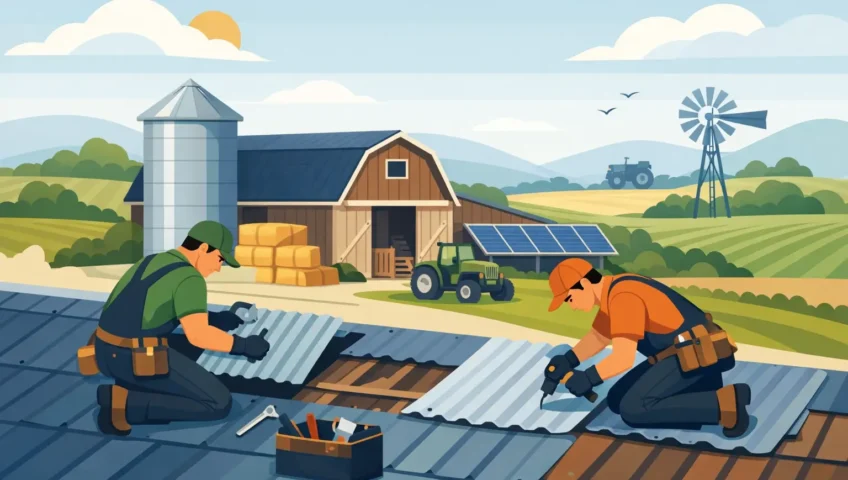
A small leak above a livestock shed or grain store can become a costly problem far quicker than most owners expect. Water can damage insulation, electrics, stored feed and machinery, while persistent damp creates an unhealthy environment for animals and workers. This guide to agricultural roof repairs explains what to look for, when a repair is likely to be enough, and when it is time to plan more substantial work.
Agricultural roofs have to cope with more than ordinary weather exposure. Scottish wind, driving rain, frost and heavy snow all take their toll, but farm buildings also face condensation, corrosive fumes, bird activity and the day-to-day vibration of machinery. A prompt, professional inspection can often prevent a minor fault becoming a major disruption to the running of the farm.
The warning signs that need quick attention
The obvious sign is water dripping inside the building, but by the time a visible drip appears, moisture may already have travelled along purlins, roof sheets or insulation. Look for damp patches, staining on timbers, wet insulation, mould, rust marks and daylight showing through the roof. A musty smell in a closed shed can also point to trapped moisture or poor ventilation.
Outside, check for loose or lifted sheets, damaged ridge caps, missing fixings, cracked fibre cement panels, perished sealants and sagging guttering. Gutters overflowing during rain are not always a gutter-only issue. Water may be running off the roof incorrectly because of damaged sheets, failed flashings or a blocked valley.
Do not ignore a change in the building’s temperature or condensation levels. In livestock housing, a cold underside to the roof combined with poor airflow can cause heavy condensation that looks like a leak. The solution may involve ventilation improvements, insulation changes or anti-condensation treatment rather than simply replacing a roof panel. Getting the diagnosis right avoids paying for work that does not solve the underlying issue.
What a proper agricultural roof inspection should cover
A safe inspection should assess the roof as a complete system, not just the point where water has appeared. The affected area may be several metres away from the actual failure, particularly on a low-pitched roof.
An experienced roofing team will normally inspect the condition of the sheets or slates, ridge and verge details, flashings around vents and rooflights, fixings, gutters, downpipes and drainage. They should also consider the condition of the supporting structure from inside the building, looking for corrosion, rot, movement or damage caused by water ingress.
Access and safety matter just as much. Agricultural roof sheets, particularly older fibre cement materials, must never be treated as safe walking surfaces. Falls through fragile roofs remain a serious risk. A contractor should use suitable access equipment and safe working methods rather than taking shortcuts to save time.
For older buildings, the roof material may need special consideration. Some historic corrugated sheets can contain asbestos. If there is any doubt, do not drill, cut, pressure wash or remove the material yourself. It needs to be identified and handled through the correct process before repairs or replacement can be planned.
Common agricultural roof repairs
The right repair depends on the roof material, the building’s use and how widespread the damage has become. A machinery store with a small leak may need a straightforward sheet repair, while a cattle shed with condensation and corroded fixings needs a broader solution.
Replacing damaged sheets and panels
Cracked, punctured or badly corroded roof sheets can usually be replaced individually where the surrounding roof remains sound. Matching the profile, material and colour as closely as practical helps maintain weather protection and a tidy finish. The contractor must also check the overlaps and fixings, as fitting a new sheet onto worn or distorted supports may only provide a short-term answer.
Renewing fixings, flashings and ridge details
Many leaks begin at a fixing rather than through the sheet itself. Over time, washers perish, screws loosen and wind movement enlarges the hole around a fixing. Replacing failed fasteners with suitable roofing fixings and weather seals can make a significant difference.
Flashings around chimneys, ventilation outlets, rooflights, valleys and wall abutments also deserve close attention. These junctions deal with concentrated water flow and are often the first areas to fail during strong wind and rain. Ridge caps should be secure, correctly lapped and properly sealed to stop wind-driven rain entering at the highest point of the roof.
Repairing gutters and roof drainage
A blocked or damaged gutter can force water back beneath the roof edge, saturate wall surfaces and create muddy, unsafe areas around the building. Agricultural gutters often collect leaves, moss, nesting material and wind-blown debris. Cleaning them is useful, but repairs may also be needed to brackets, joints, outlets and downpipes.
Where a roof regularly overwhelms its existing drainage, upgrading the gutter size or altering the fall may be more sensible than repeatedly patching leaks. This is particularly relevant on large-span sheds, where a heavy downpour sends a substantial volume of water to one gutter run in a short time.
Repair, coating or replacement: making the right call
A full replacement is not always necessary. If the roof structure is sound and the damage is localised, targeted repairs can extend its serviceable life at a much lower cost. This is often the best route for farm buildings where budget, access and operational downtime all need careful consideration.
Roof coatings can also be worthwhile on suitable surfaces. A properly prepared coating system can improve weather resistance and refresh the appearance of a tired roof. However, coating is not a cure for loose sheets, structural movement, serious corrosion or widespread leaks. The roof needs to be sound, clean and dry enough for the coating to perform as intended.
Replacement becomes the more responsible option when corrosion is widespread, sheets have become fragile, the roof has repeated leaks across several areas, or the supporting structure requires major attention. It can also be an opportunity to add rooflights, insulation or improved ventilation. The upfront cost is higher, but continuing to spend on short-lived repairs can prove more expensive over several years.
A clear written quote should set out what has been found, what repair is proposed, and whether there are likely to be additional works once access is gained. That gives farm owners a fair basis for comparing options rather than choosing purely on the lowest initial price.
Keeping disruption to a minimum
Agricultural repairs need to fit around the building’s purpose. Livestock, feed, machinery and stored crops must be protected before work starts. In some cases, repairs can be completed in sections to keep most of the building in use. In others, moving vehicles or stock temporarily is the safer choice.
Weather planning matters too. Dry conditions are preferable for sealing, coating and sheet replacement, but urgent leaks cannot always wait for a perfect forecast. A reliable contractor should be honest about what temporary protection can be installed immediately and when permanent repairs can be completed safely.
For working farms across Glasgow, Lanarkshire and the surrounding rural areas, Varey Contracts Ltd can assess agricultural roof damage, explain the most cost-effective repair route and provide a free written quote before work begins.
Simple maintenance that prevents expensive repairs
Most agricultural roofs benefit from an inspection at least once a year, with an additional check after severe storms. This does not mean climbing onto the roof. A ground-level visual check, internal inspection and professional assessment where needed are safer and often enough to spot early concerns.
Keep gutters and valleys clear, trim back branches that scrape the roof, and deal with bird nesting activity before it blocks drainage or damages seals. If a panel has been dented by equipment or a storm, arrange a repair promptly rather than waiting for the next period of heavy rain.
It is also worth keeping a record of repairs, inspections and photographs. This helps identify recurring faults, supports maintenance planning and gives useful information if you are budgeting for future roof renewal.
A dry, secure farm building protects much more than the roof itself. Acting on the first signs of damage gives you more repair options, less disruption and a better chance of avoiding an emergency when the weather turns.


