

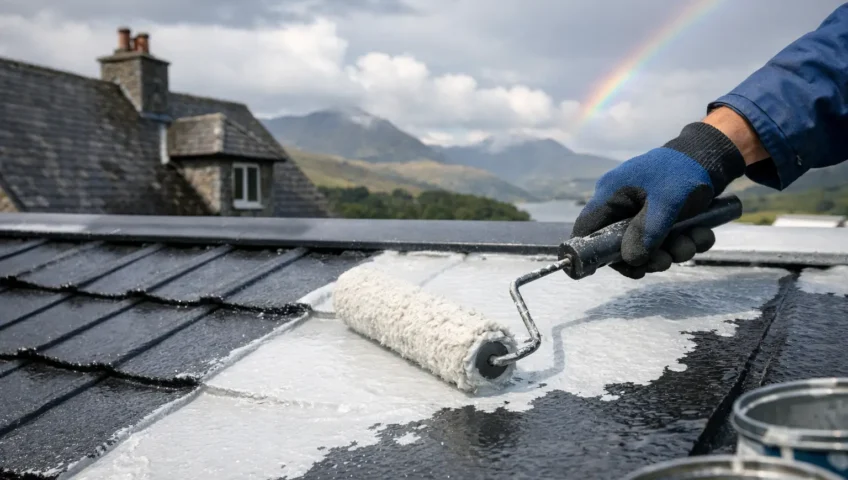
A faded, moss-covered roof can make a property look tired long before the roof has reached the end of its working life. Knowing how to choose roof coatings can help you protect a sound roof, improve its appearance and avoid paying for a replacement before it is genuinely needed. The key is choosing a coating to suit the roof beneath it, not simply picking the cheapest colour or the quickest application.
In Glasgow and Lanarkshire, roofs deal with persistent rain, frost, wind, damp air and regular moss growth. A proper roof coating can provide a renewed, water-resistant finish, but it must follow thorough cleaning, repairs and preparation. Applied to the wrong roof, or used to cover existing defects, it can create a more expensive problem later.
Start with the condition of the roof
The first question is not which coating to buy. It is whether the roof is a suitable candidate for coating at all. Coatings work best on roofs that are structurally sound but weathered, discoloured or becoming porous with age.
A professional inspection should check for cracked, slipped or missing tiles, damaged ridge pointing, loose flashing, failed valleys and signs of water getting into the roof space. Any faults need repaired before coating starts. A coating is a protective finish, not a substitute for sound tiles, proper leadwork or effective roof drainage.
Look closely at the underside of the roof as well. Damp insulation, water marks on timbers, mould in the loft or recurring ceiling stains may point to a leak that needs traced and repaired. Covering the outside of the roof without finding the source is unlikely to solve it.
A roof that is badly deteriorated, extensively cracked or near the end of its lifespan may be better suited to repair work or replacement. Honest advice matters here. Coating a roof that should be renewed may delay the visible signs, but it will not restore its strength.
How to choose roof coatings by roof material
Different roof materials absorb water, expand and contract, and shed rain in different ways. The right system must be compatible with the roof surface.
Concrete roof tiles
Concrete tiles are one of the most common surfaces for roof coating. Over time, their factory finish can wear away, leaving them more prone to water absorption, dirt and moss. Once they have been carefully cleaned and allowed to dry, a quality tile coating can refresh the colour and create a protective barrier.
Check that the chosen product is designed for concrete tiles and allows the roof to breathe. A poorly suited coating can trap moisture rather than managing it properly. The finish should also be applied at the manufacturer-recommended coverage rate, not watered down to make a tin go further.
Clay tiles and slate roofs
Clay tiles and natural slate need a more cautious approach. Both can last for decades when maintained correctly, and their value often lies in their natural appearance and durability. A standard coloured coating may not be appropriate, particularly for traditional slate roofs or properties in conservation areas.
For these roofs, cleaning, replacement of damaged units, re-pointing and careful repairs are often more beneficial than coating. Where a protective treatment is suitable, it should be selected specifically for the material and applied only after an experienced roofer has assessed the roof.
Flat roofs
Flat roof coatings are a separate category from tile coatings. Felt, asphalt, fibreglass and single-ply flat roofs require compatible liquid systems that can deal with standing water, movement and UV exposure. The wrong product may peel, crack or fail to bond.
Before choosing a flat roof coating, establish what the existing roof covering is made from and whether it is still securely adhered. Blisters, splits, soft areas, ponding water and leaks around upstands should be repaired first. In some cases, a liquid coating system is a cost-effective way to extend the life of a sound flat roof. In others, a new covering is the safer investment.
Do not underestimate cleaning and preparation
The lifespan of a roof coating is heavily influenced by what happens before the first coat is applied. Moss, algae, dirt, loose mortar and flaking old paint prevent a coating from bonding properly. A clean-looking finish applied over contamination can begin lifting far sooner than expected.
Preparation normally includes controlled roof cleaning, clearing gutters and checking that downpipes are protected from debris. Damaged tiles, ridge tiles and flashing should be repaired, while porous or unstable areas may need a suitable primer. The roof must then dry fully before coating. Scottish weather can make this part of the job difficult, which is why timing and weather monitoring matter.
Be wary of anyone who proposes coating a roof immediately after heavy washing, particularly during a damp spell. Moisture held within tiles can compromise adhesion. A reputable contractor will plan the work around dry conditions and explain the preparation required rather than promising an unrealistic one-day transformation.
Consider the finish, colour and practical performance
The appearance of a roof matters, but colour should be the final decision rather than the first. Choose a shade that suits the brickwork, render, windows and neighbouring properties. Dark greys, browns and terracotta tones are often practical choices because they complement common Scottish property styles and do not show everyday dirt as readily as very pale finishes.
Ask how the coating will perform in rain, frost and sunlight. A good system should be water-resistant, UV-stable and flexible enough to cope with seasonal movement. It should also resist algae and moss growth, although no coating can keep a roof completely maintenance-free in a damp climate.
A very glossy finish can look striking at first but may not suit every property. A more natural matt or low-sheen finish is often a better match for established homes. If you are coating only part of a roof after repairs, consider whether a colour match is realistic. Weathering means even the same nominal colour can look different beside older tiles.
Check what the quotation actually includes
Roof coating prices vary because the work involved varies. A low quote can be tempting, but it is worth checking whether it includes cleaning, minor repairs, primers, multiple coats, access equipment, gutter clearing and waste removal. These are not small extras. They directly affect the quality and durability of the finished job.
Ask for a clear written quotation that states the roof area, the preparation process, the coating system being used and the number of coats planned. It should also explain what is excluded. For example, major tile replacement, chimney repairs or extensive leadwork may need priced separately after inspection.
Guarantees should be clear and realistic. Find out whether the guarantee covers workmanship, materials or both, and what maintenance is expected from the property owner. A guarantee is most useful when it is backed by a local, established contractor who can return if there is a genuine issue.
Know when coating is not the right answer
A roof coating is a restoration option, not a cure for every roofing problem. If the roof has widespread broken tiles, sagging areas, failing underlay, major water ingress or repeated storm damage, repair or replacement may provide better value over the long term.
The same applies where moss has lifted tiles or blocked gutters. Removing the growth and repairing the damage comes first. Coating should only be considered once the roof is clean, dry, secure and capable of supporting a protective finish.
For landlords and commercial property managers, it is also sensible to consider the property’s planned maintenance cycle. If a full redevelopment or roof replacement is likely within a short period, spending heavily on a cosmetic coating may not be the best use of the budget. If the roof is otherwise healthy and needs a few more reliable years of service, restoration can be a sensible cost-saving choice.
Get advice based on your roof, not a sales pitch
The best way to choose is to arrange an inspection and ask for straightforward recommendations. An experienced roofer should be happy to explain whether cleaning, repairs, coating or replacement is the right route, along with the likely costs and limitations of each option.
Varey Contracts Ltd provides roof inspections and free written quotes for property owners across Glasgow, Hamilton and the surrounding area. A proper assessment gives you the information to protect your roof with confidence, whether that means a carefully applied coating or a different repair that will last longer.


